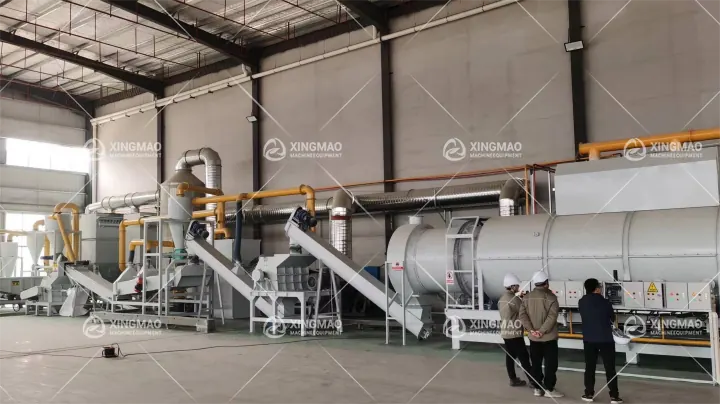
Product Overview
An integrated mechanical recycling system for recovering black mass, copper, aluminum, steel and other fractions from waste lithium batteries.
Working Principle
Prepared batteries pass through shredding, secondary crushing, air classification, magnetic separation, screening and density separation under dust collection.
Key Features
- Configurable for the customer’s feed material and target output.
- Designed for integration with upstream and downstream equipment.
- Service access and operating controls can be adapted to the final line layout.
- Dust, gas, electrical, fire and explosion controls must be selected for the actual application.
Technical Specifications
- Capacity stated: 0.3–2 t/h
- Footprint envelope: 36 × 10 × 5 m
- Maximum power: 280 kW
- Supply: 380 V / 50 Hz, customizable
- Fine crushing: approx. 20 mesh
Technical review note: Source also states 500 kg/h and 5,000 t/year; configuration ranges conflict and require confirmation.
Processing Materials
- Waste lithium-ion batteries of multiple formats
- prepared cells and battery scrap
Applications
- Industrial recycling and resource recovery plants
- Production scrap processing where the listed feedstock is applicable
- Integration into a complete recycling production line
Advantages
- Application-led equipment configuration rather than a generic package
- Mechanical integration with feeding, conveying, separation and collection stages
- Support for layout planning, installation guidance and operator training
FAQ
How is the correct model selected?
Selection depends on representative feedstock, size, composition, required throughput, target products, operating hours, site utilities and local safety requirements.
Are the published specifications guaranteed?
No. Values above are preserved from the source page. Final guaranteed data must be stated in the approved technical proposal for the selected configuration.
Can the equipment be tested with customer material?
Representative material testing is recommended whenever feedstock variability may affect capacity, separation or safety.
Request Quote
Please provide material photos or samples, required capacity, target products, installation country, site power supply and project timeline.
Source
- Original page: https://www.xingmaojx.com/product-69.html
- Original material directory:
锂电池破碎回收设备/锂电池破碎回收设备产品