Skip to content
Battery Recycling Equipment Manufacturing Engineering · Manufacturing · Global Service
EV Battery Pre-Treatment & Echelon Utilization

EV Battery Module Dismantling Line

A configurable dismantling system for separating power lithium battery modules into individual cells, structural components and electrical connection parts before testing, second-life utilization or downstream recycling. The line can combine conveyorized workstations, manual operations, robot-assisted cutting, vision positioning, clamping, fastener removal and cell extraction according to module structure and required automation level. Final station layout, automation level and tooling are confirmed according to module dimensions, enclosure design, fastener type, busbar/FPC arrangement, cell format and target production takt.

01 / Production line overview

Disassemble Battery Modules While Preserving Cells for Testing and Reuse

Module-level dismantling — not complete pack dismantling and not cell crushing / black-mass recycling.

Power battery modules contain cells, busbars, FPCs, side plates, end plates, fasteners, insulation materials and other structural components. BREM configures the dismantling line to remove these parts in a controlled sequence so that cells can be extracted with minimal unnecessary damage.

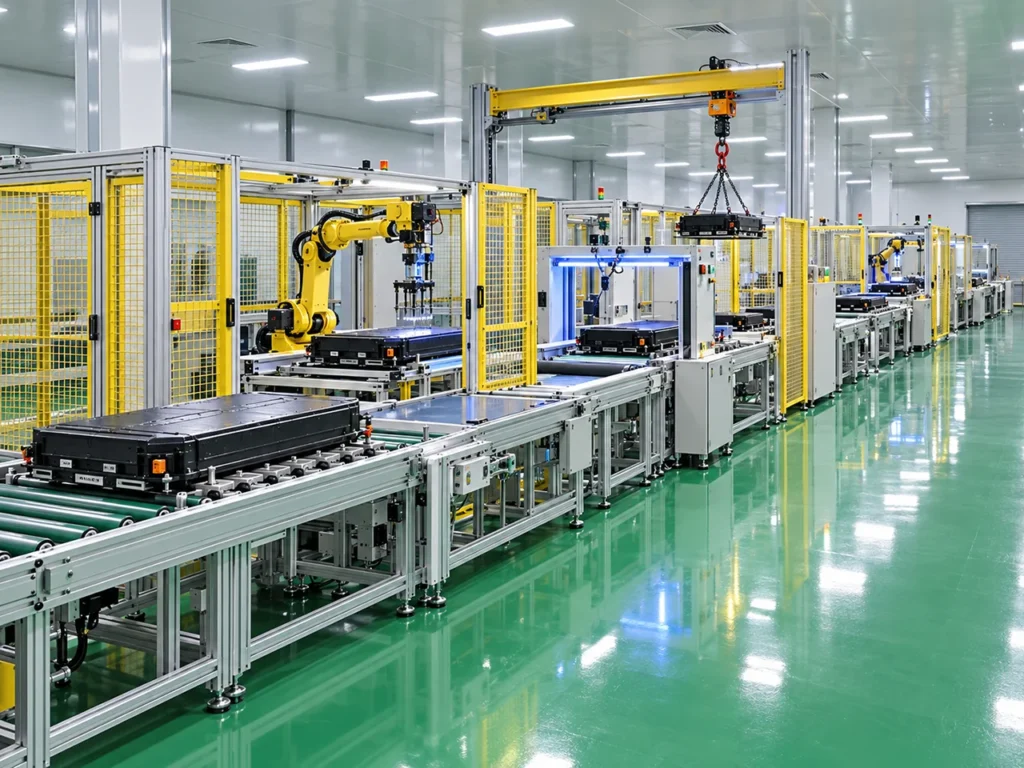
The supplied process uses a modular conveyor layout with semi-automatic and manual stations. Depending on the module design, operations can include lifting, FPC cutting, rivet removal, clamping and rotation, side/end plate removal, insulation-pad removal, connection-tab cutting and final cell extraction.

Robot-assisted stations can be integrated for cutting and dismantling tasks. The supplied source also shows the use of image/vision positioning and calibration to support automated cutting and component-removal operations.

After dismantling, reusable modules or individual cells can enter testing and grading for echelon utilization. Cells that fail reuse criteria can be routed to downstream discharge, crushing and material-recovery processes. Echelon utilization is a possible downstream route after testing — not a guaranteed result of the dismantling equipment.

01 — Cell-Preserving Dismantling: The dismantling sequence is designed to remove module structure and electrical connections while preserving cells for inspection and testing wherever possible.
02 — Flexible Automation: Manual, semi-automatic and robot-assisted stations can be combined according to module structure, project capacity and labor strategy.
03 — Vision-Assisted Operations: Image-based positioning and calibration can support automated cutting, locating and dismantling operations for repeatable module designs.
04 — Second-Life-Oriented Process: Recovered modules and cells can move to electrical testing and grading before a decision is made between echelon utilization and recycling.

This page is for EV / power lithium battery module dismantling. It is not a complete pack dismantling line, cell crushing line, black-mass line, discharge equipment page, PCB dismantling page or electrode-sheet recycling page. If the incoming material is a complete pack, pack-level dismantling must be completed upstream unless the project scope explicitly combines both stages.

Disassemble Battery Modules While Preserving Cells for Testing and Reuse
02 / Feedstock & Outputs

Prepared Battery Modules In, Cells and Separated Module Components Out

The standard feed is a prepared power battery module rather than a complete EV battery pack. Module construction, cell format and connection method determine the required tooling and dismantling sequence.

Feedstock

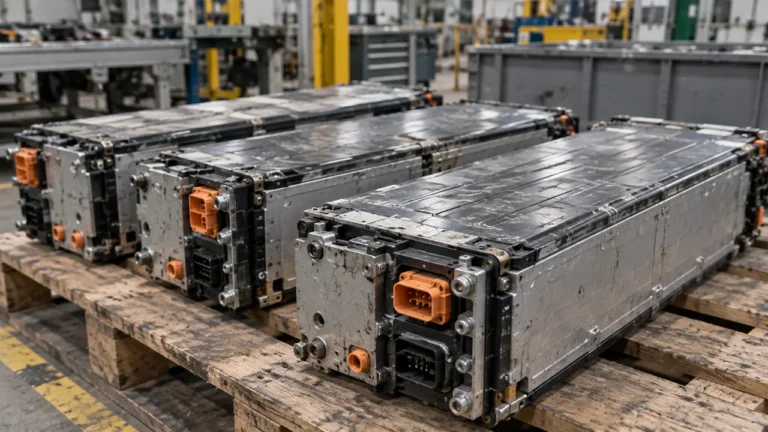
EV Battery Modules

EV Battery Modules

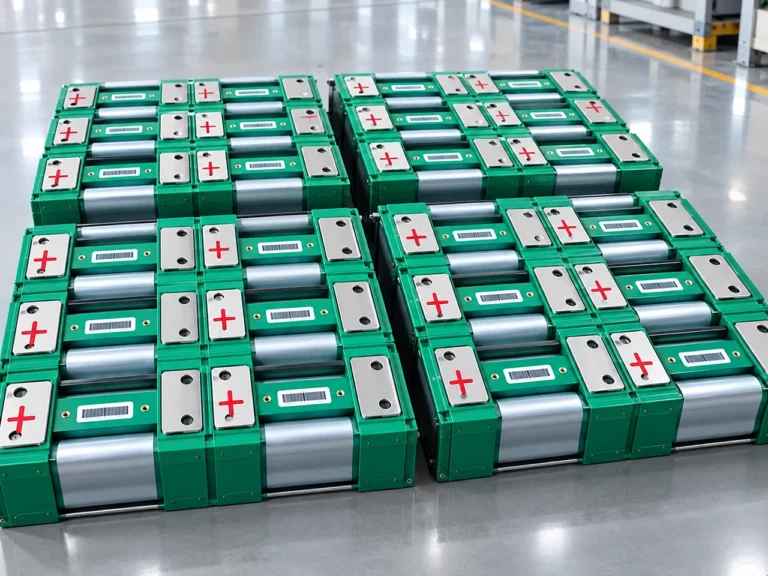
Power lithium battery modules removed from battery packs and prepared for controlled dismantling. Typical forms: prismatic-cell modules; module assemblies with side/end plates; modules with FPC and busbar connections; reviewed modules suitable for mechanical dismantling.

Second-Life Evaluation Modules

Second-Life Evaluation Modules

Used modules requiring structural dismantling so that individual cells can be inspected, tested and graded for possible echelon utilization.

Rejected / Damaged Modules

Rejected / Damaged Modules

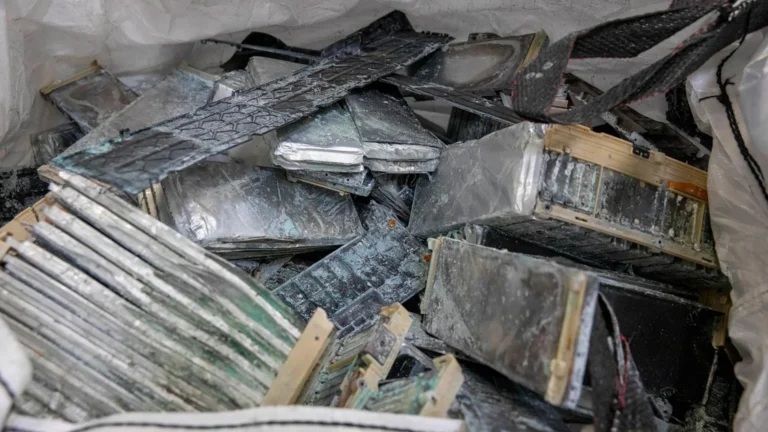
Modules that cannot be reused as complete modules but may still contain individual cells suitable for testing or downstream recycling.

Outputs

Recovered Individual Cells

Recovered Individual Cells

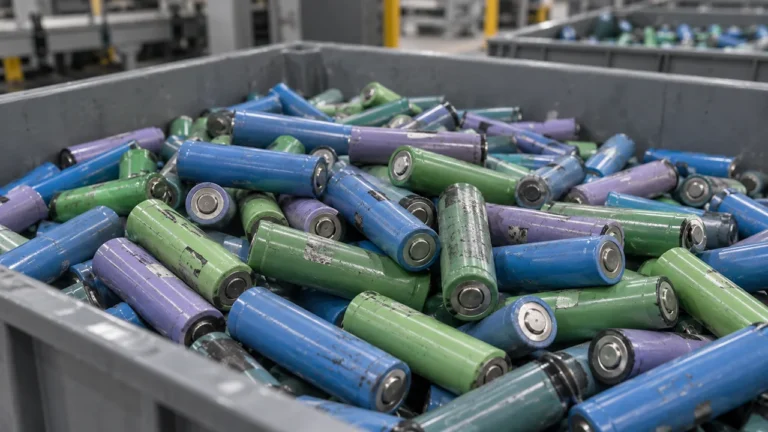
Cells removed from the module structure and transferred to downstream inspection, electrical testing, grading or recycling.

Reusable Module / Subassembly

Reusable Module / Subassembly

Where condition and design permit, intact modules or subassemblies may be retained for testing and potential echelon utilization rather than fully dismantled.

Side Plates / End Plates / Structural Parts

Side Plates / End Plates / Structural Parts

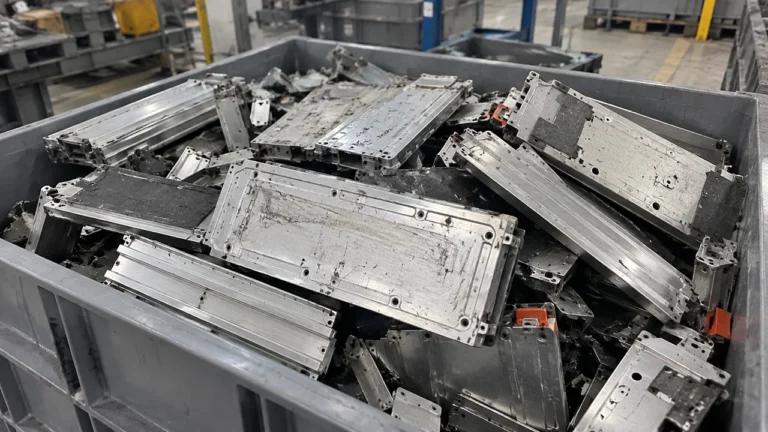
Recovered module housing and structural components separated during the dismantling process.

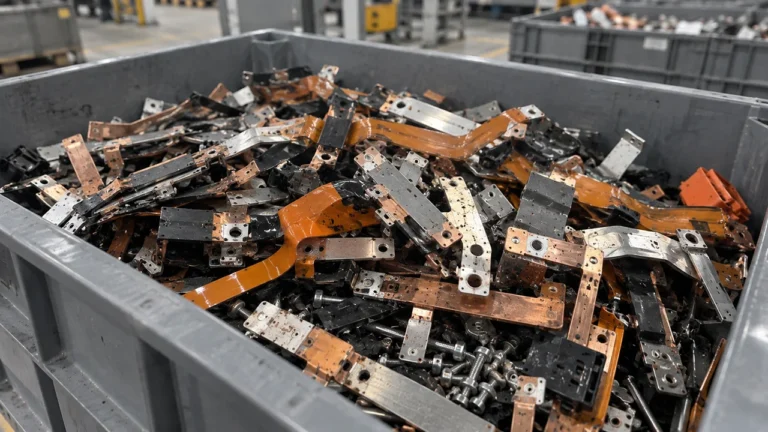
FPC / Busbar / Connection Components

FPC / Busbar / Connection Components

Flexible circuits, busbars, tabs, fasteners and other electrical/mechanical connection parts removed before cell extraction.

Insulation / Gasket Materials

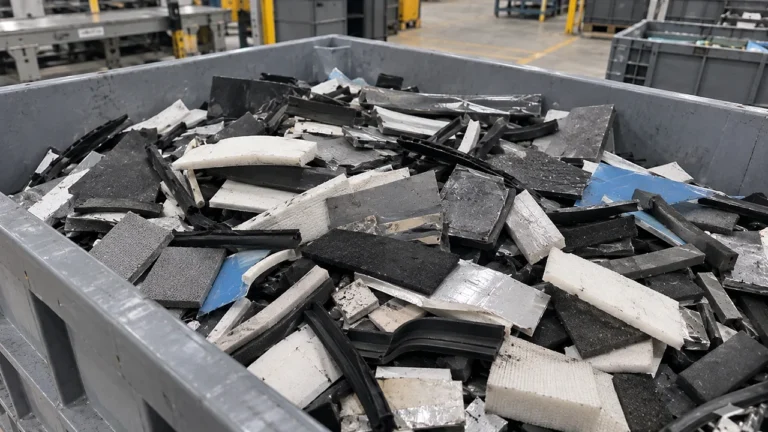
Insulation / Gasket Materials

Pads, foam, insulation sheets and similar module assembly materials removed during dismantling.

Complete battery packs, energized modules, thermally damaged modules, leaking cells or modules with unknown electrical condition require separate upstream safety evaluation, isolation and discharge procedures before standard dismantling.

03 / Complete Production Line & Process Overview

From Prepared Battery Module to Individual Cells and Separated Components

The supplied process is organized as a modular conveyor workflow. Some stations are manual, while cutting, positioning and dismantling tasks can be upgraded with robot and vision assistance.

Process Stages

Conveyorized stations remove electrical and structural connections in sequence so cells can be extracted for testing or routed to recycling when reuse criteria are not met.

01

Module Loading / Hoisting

The prepared battery module is lifted or transferred onto the module dismantling conveyor and positioned for the first operation.

02

FPC / Electrical Connection Cutting

Flexible printed circuits and designated electrical connections are cut or removed before mechanical disassembly. The source describes manual FPC cutting in the reference workflow.

03

Buffer & Positioning

The module enters a buffer / positioning station so downstream workstations receive the module in a controlled orientation and sequence.

04

Rivet / Fastener Removal

Rivets and mechanical fasteners securing the side structure are drilled, cut or removed. The source shows electric-drill rivet removal together with a lifting / rotation and module-clamping mechanism.

05

Module Clamping & Rotation

The module is clamped and, where required, rotated to expose the target side or fastener position for subsequent dismantling operations.

06

Side Plate & End Plate Removal

Operators or automated tools remove loosened side plates and end plates and place them into designated collection positions.

07

Cell Pad / Insulation Removal

Foam pads, gaskets or insulation materials attached to cells are removed to prepare the cell group for separation.

08

Connection Tab / Busbar Cutting

Remaining connection tabs or busbar links are cut or removed so individual cells can be separated without unnecessary mechanical damage.

09

Cell Extraction

Individual cells are manually or mechanically removed from the dismantled module structure and placed onto the cell-transfer / sorting conveyor.

10

Testing Route / Recycling Route

Recovered modules or cells proceed to inspection and testing for echelon utilization. Cells or modules that do not meet reuse criteria are routed to the appropriate downstream recycling process.

The source workflow is a reference layout for power battery module dismantling. Actual station order may change according to module architecture, joining method, pack manufacturer and target automation level.

04 / Main Equipment Configuration

Modular Workstations for Cutting, Fastener Removal and Cell Extraction

The line is configured around the actual module structure. No matching standalone Product CPT currently exists for these workstations; equipment is described as production-line components rather than invented Product cards.

Equipment cards will appear here once published Products are linked.

Line-engineering components (no auto-created Product CPT):
• Module dismantling conveyor — transfer modules through the sequence and provide station-to-station takt control
• Robot cutting / dismantling station — robot-assisted cutting with vision / calibrated positioning where applicable
• Module clamping & rotation station — secure and rotate the module for side/fastener access
• Rivet / fastener removal station — drill, cut or remove fasteners before panel removal
• Side / end plate dismantling station — remove loosened structural plates
• Cell connection cutting station — cut or remove tabs / busbars before cell extraction
• Cell extraction & transfer station — remove cells onto inspection / sorting conveyor
Supporting: hoisting, buffer stations, roller conveyors, safety guarding, human-robot collaborative stations, work tables, visual / calibration system, CNC / robotic cutting equipment, inspection / testing interface and cell transfer conveyor.

05 / Technical Parameters

Project-Specific Module Dismantling Parameters

The supplied material does not provide a verified universal capacity, installed power or cycle time. These values must be engineered from the target module type, dismantling depth and automation level.

Parameter Specification
Processing Capacity Configured by project — no verified universal throughput in the supplied source
Applicable Feedstock Prepared EV / power lithium battery modules
Applicable Battery Chemistry Project-dependent module chemistry / cell format — confirm from module design
Processing Method Loading → FPC/connection removal → fastener removal → plate removal → insulation removal → tab/busbar cutting → cell extraction
Recovered Fractions Individual cells + structural parts + FPC/busbar/fasteners + insulation materials (+ optional reusable module/subassembly)
Automation Level Manual / semi-automatic / robot-assisted — project-dependent; vision / calibration where applicable
Installed Power Configured by project — not invented from source
Typical Floor Space Configured by project
Operating Mode Conveyorized modular dismantling with collaborative workstations
Dust Control Localized capture at cutting/drilling stations when required
Exhaust Treatment Project-specific when laser, thermal or other fume-generating cutting methods are used
Utilities Power, compressed air and utilities confirmed from station layout and tooling selection

NO VERIFIED UNIVERSAL THROUGHPUT, INSTALLED POWER, CELL-RECOVERY PERCENTAGE OR DISMANTLING TAKT is provided in the supplied source material. Do not invent these figures. Final values must be confirmed from current BREM engineering data for the customer's target module.

Takt time, operator count and plant footprint are configured by module design, station count and automation level. Echelon / second-life utilization is a possible downstream decision after testing — not an equipment-guaranteed outcome.

06 / Output Quality

Separated Cells and Module Components for Testing or Recycling

The dismantling line is designed to separate the module into distinct output streams while preserving cells for inspection wherever practical.

Recovered Individual Cells

Cells extracted from the module and prepared for visual inspection, electrical testing, sorting or downstream recycling.

Recovery Performance
Reuse eligibility determined by testing — not by the dismantling line
Downstream Use
Inspection, electrical testing, grading, echelon utilization or recycling.

Reusable Module / Subassembly

Where the module remains suitable for testing and reuse, selected assemblies can be retained for echelon-utilization evaluation.

Downstream Use
Module-level testing and possible second-life evaluation.

Structural Metal Components

Side plates, end plates, brackets, fasteners and other module structural parts separated during dismantling.

Downstream Use
Metal recycling or remanufacturing according to material type.

FPC / Busbar / Electrical Connections

Electrical connection parts removed before cell extraction, including FPCs, tabs, busbars and related connection hardware.

Downstream Use
Sorted electrical/mechanical material recovery according to composition.

The supplied source does not provide verified reuse yield, cell pass rate or dismantling damage rate. These percentages are not invented. Add only when supported by current project test data.

07 / Safety Engineering

Safety Controls for Energized Components, Cutting and Human-Robot Workstations

Battery module dismantling can involve residual electrical energy, heavy modules, sharp metal structures, cutting tools and collaborative workstations. The final line must combine electrical, mechanical and operational safeguards.

01

Electrical Condition Verification

Modules must be checked for voltage, insulation condition and suitability for dismantling before entering the standard workflow.

02

Controlled Hoisting & Clamping

Lifting, positioning and clamping systems stabilize heavy modules during dismantling and reduce uncontrolled movement.

03

Cutting / Tool Guarding

Robot, CNC and manual cutting stations require guarding, access control and safe tool-change / maintenance procedures.

04

Human-Robot Separation

Robot-assisted workstations should use safety fencing, interlocked access, safe zones or other project-appropriate collaborative-safety measures.

05

Damaged Module Isolation

Swollen, leaking, thermally damaged or electrically abnormal modules should be removed from the standard dismantling flow and handled under a dedicated safety procedure.

06

PLC Interlocks & Emergency Stops

Conveyors, robots, clamps and cutting tools should be interlocked with emergency-stop circuits, fault alarms and controlled restart procedures.

Energized, leaking or thermally damaged modules must not be assumed safe for the standard workflow. Upstream isolation and discharge procedures apply where required.

08 / Environmental Control

Clean Mechanical Dismantling with Controlled Material Handling

Module dismantling is primarily a mechanical pre-treatment process. Environmental control focuses on safe collection of removed parts, clean workstations and control of any localized dust or fumes generated by cutting operations.

A

Separated Material Collection

Structural parts, FPCs, busbars, insulation materials and rejected cells are collected in dedicated containers to prevent cross-mixing.

B

Localized Dust / Fume Capture

If cutting or drilling generates dust or fumes, source-capture equipment should be installed at the relevant workstation.

C

Clean Workstation Design

Guarded conveyor cells, defined collection areas and standardized material bins improve housekeeping and reduce uncontrolled material spread.

D

Project-Specific Exhaust Treatment

Where laser, thermal or other cutting methods generate process fumes, the extraction and purification system should be selected according to the actual cutting process and local environmental requirements.

Unsupported absolute emission claims are not used on this page. Environmental controls are selected according to cutting method, material handling and local requirements.

09 / Real Project Case

Battery Module Dismantling Reference Configuration

Reference Configuration / Process Equipment Material — not a named customer case.

Reference Configuration

In the reference workflow, battery modules are loaded onto a conveyor line and pass through FPC removal, buffering, rivet/fastener removal, structural-panel dismantling, cell accessory removal, connection cutting and final cell extraction. The source shows a semi-automatic and manual collaborative layout, together with robot-assisted cutting and image / calibration-based positioning. This allows the line to be adapted to repeatable module designs while retaining manual stations where product variation makes full automation less practical. The final material routes support echelon utilization: intact modules and individual cells can be tested, while rejected material can be sent to the appropriate downstream battery-recycling process. No capacity, takt, power or reuse-yield figures are invented for this reference layout.

Feedstock
Prepared power lithium battery modules
Main Objective
Separate module structure and extract individual cells
Automation
Manual + semi-automatic + robot-assisted
Main Outputs
Individual cells + structural components + connection parts
Downstream Route
Testing / echelon utilization / recycling

No customer name, country, commissioning year, capacity, takt, installed power or reuse yield is invented.

10 / FAQ

Battery Module Dismantling Line FAQ

Resolve module-vs-pack scope, automation and capacity questions before requesting a proposal.

What type of battery does this line dismantle?

The line is designed for prepared EV / power lithium battery modules. Final tooling and workstation design depend on module enclosure, cell format, fasteners, busbar/FPC structure and dismantling depth.

Can it process complete EV battery packs?

This page is positioned for module-level dismantling. Complete battery packs normally require an upstream pack dismantling process before modules enter this line, unless the final project scope explicitly combines both stages.
Is the line fully automatic?

The supplied source shows a modular combination of manual, semi-automatic and robot-assisted stations. The appropriate automation level depends on module consistency, throughput target, labor strategy and project budget.

What parts are removed from the module?

Typical operations include removing FPCs, rivets or fasteners, side/end plates, insulation pads, connection tabs or busbars, followed by extraction of individual cells.

Can the recovered cells be reused?

Recovered cells can be transferred to inspection and electrical testing. Cells that meet the customer's reuse criteria can enter echelon-utilization routes, while non-qualified cells are sent to recycling. The dismantling line itself does not determine reuse eligibility.

Does the system use robot vision?

The supplied source shows robot-assisted dismantling with image / calibration-based positioning. Vision systems are most suitable where module geometry is repeatable and the target cutting or dismantling points can be reliably identified.

What capacity can the line achieve?

The supplied material does not provide a verified universal capacity. Throughput is determined by module design, number of dismantling steps, automation level, takt time and the amount of manual work required.

What information is needed for a technical proposal?

Please provide module photos or CAD drawings, module dimensions and weight, cell format, module manufacturer/model, FPC/busbar layout, fastening method, whether modules are energized or discharged, target dismantling depth, required capacity, preferred automation level, project location and available floor space.

11 / Request a Technical Proposal

Send Your Battery Module and Dismantling Requirements

Provide BREM with module drawings, photos, dimensions and your target dismantling depth. Our engineering team will review the module structure and recommend the conveyor layout, cutting stations, clamping system, robot options and cell-extraction process for the project.

You can also upload material photos, equipment images, plant layouts or technical documents.