
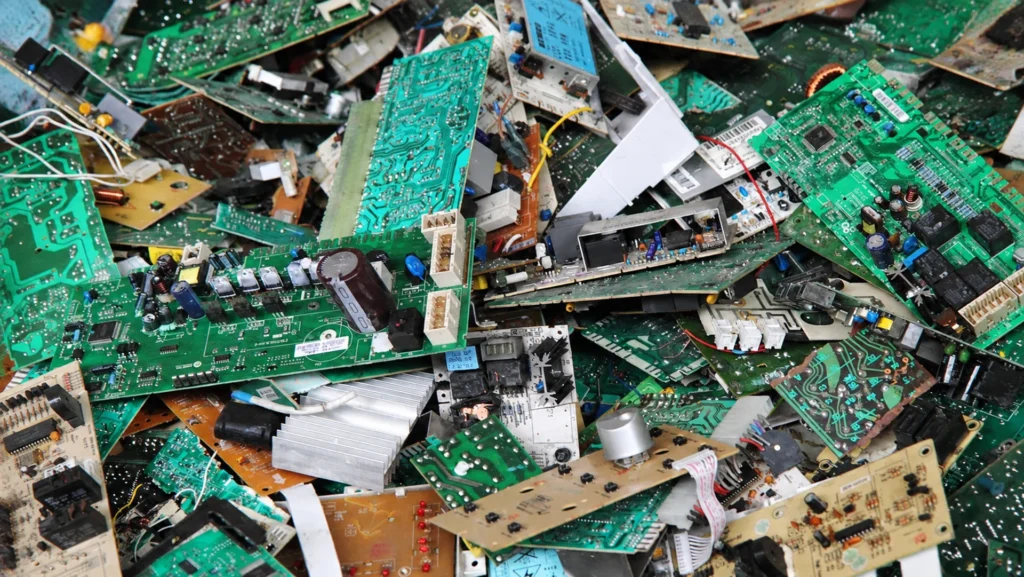
Populated Waste PCBs
End-of-life printed circuit boards carrying mounted electronic components and soldered connections, including computer boards, control boards, appliance boards and communication boards.
Recover copper-rich and non-metallic fractions from waste printed circuit boards through controlled dismantling, crushing, classification and physical separation.
This solution can be configured for different PCB and copper-clad laminate feedstocks, with optional front-end dismantling depending on component condition and downstream recovery targets.
End-of-life printed circuit boards carrying mounted electronic components and soldered connections, including computer boards, control boards, appliance boards and communication boards.
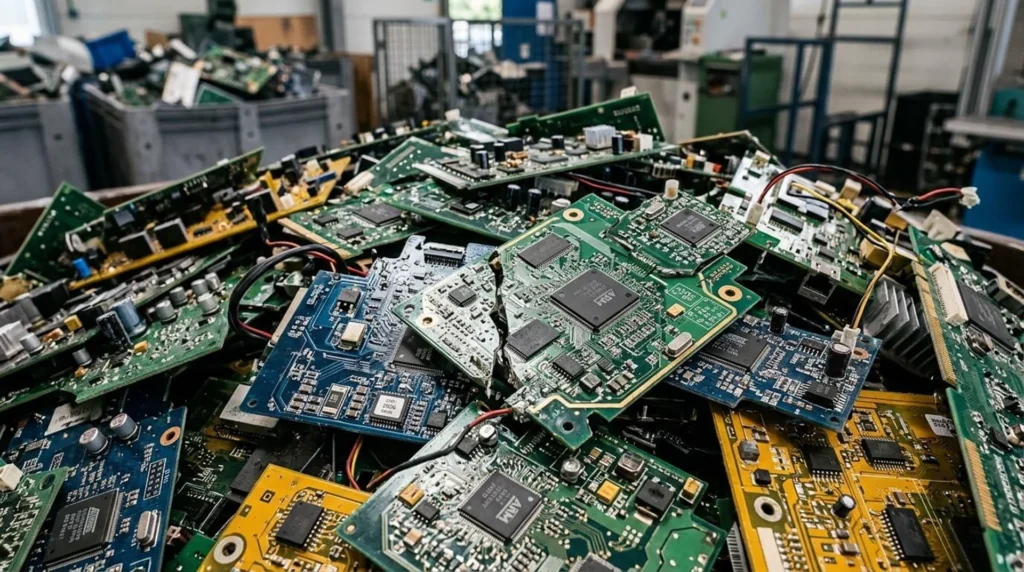
Rejected, obsolete or off-spec assembled boards that still contain mounted components and can benefit from controlled dismantling before downstream processing.
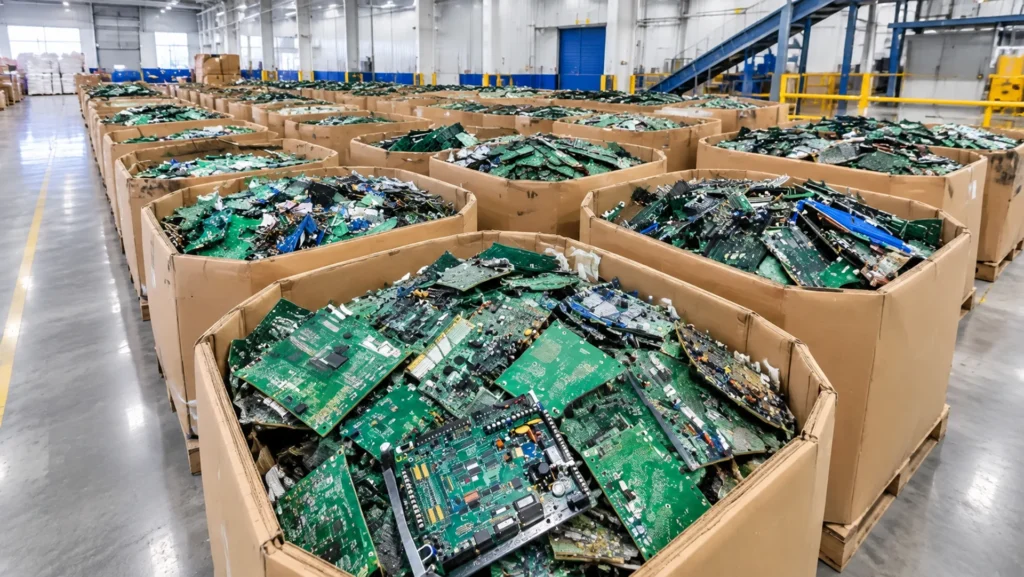
Boards already removed from housings, batteries, large heat sinks or other incompatible assemblies and prepared for controlled dismantling or size reduction.
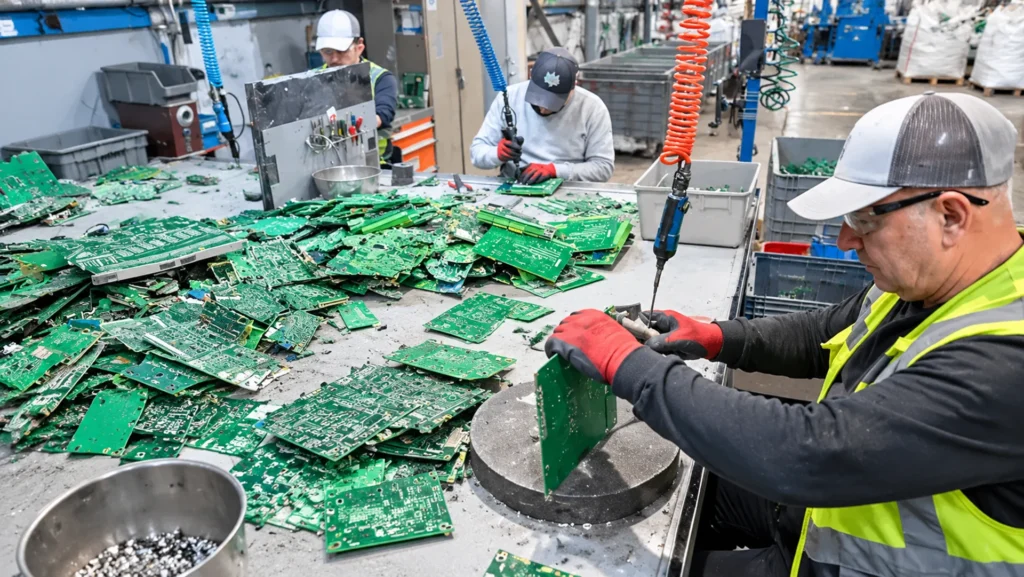
PCB substrates after mounted components have been removed, suitable for crushing, pulverizing and metal / non-metal separation.
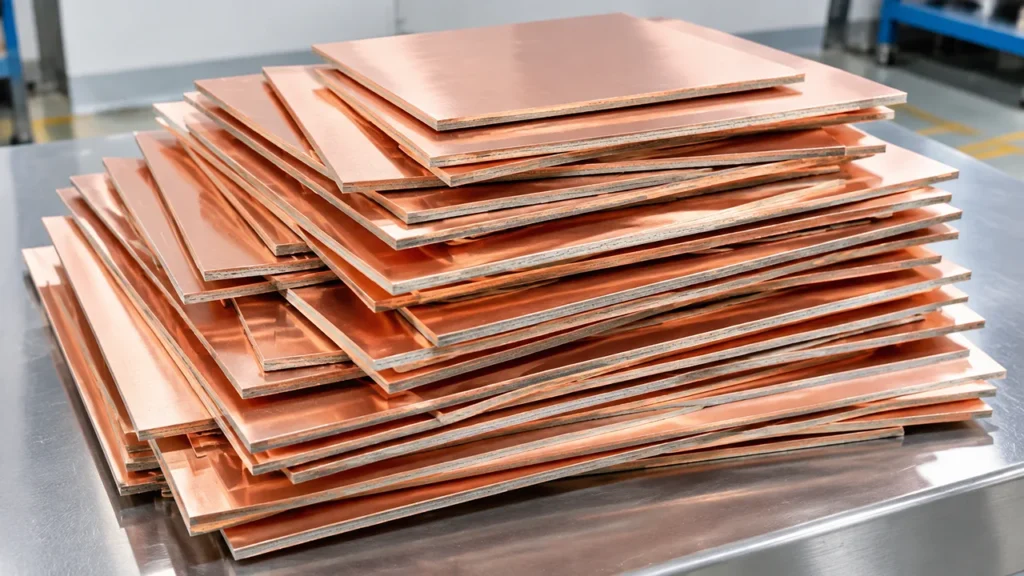
Copper-clad laminate production scrap or prepared laminate material containing bonded copper foil, resin and reinforcing fiber.
The final output fractions depend on PCB construction, component-removal strategy, liberation quality and downstream requirements. The process is configured around the material fractions the project intends to recover.
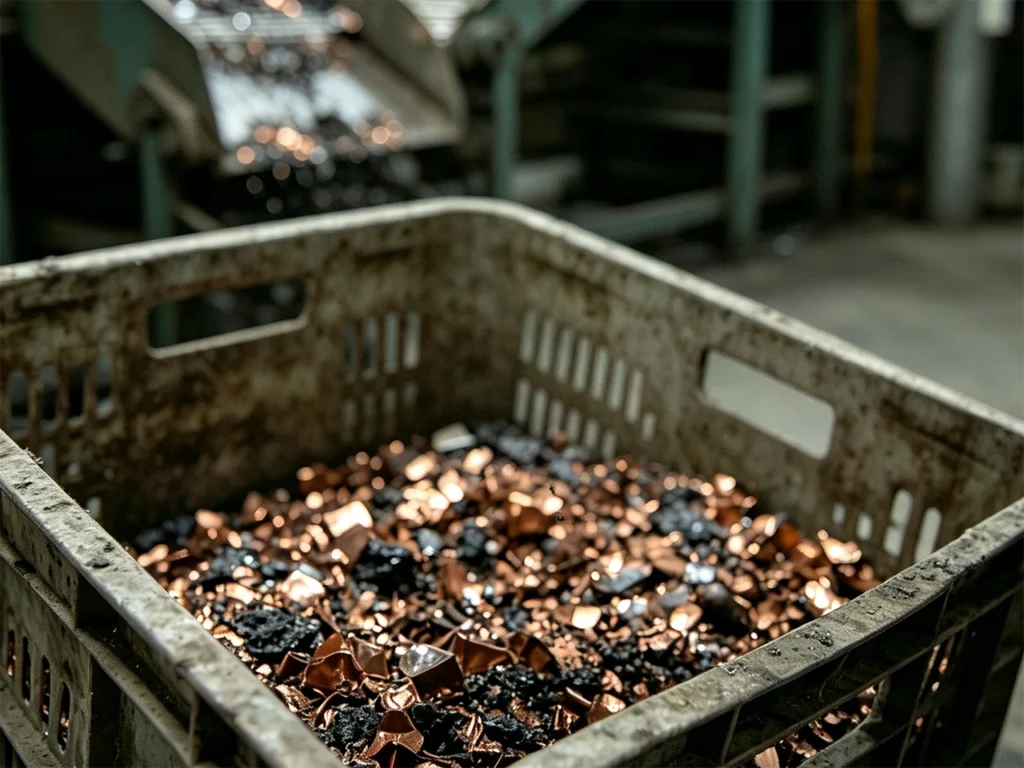
Metal-rich fraction containing liberated copper and other conductive material recovered after physical separation.
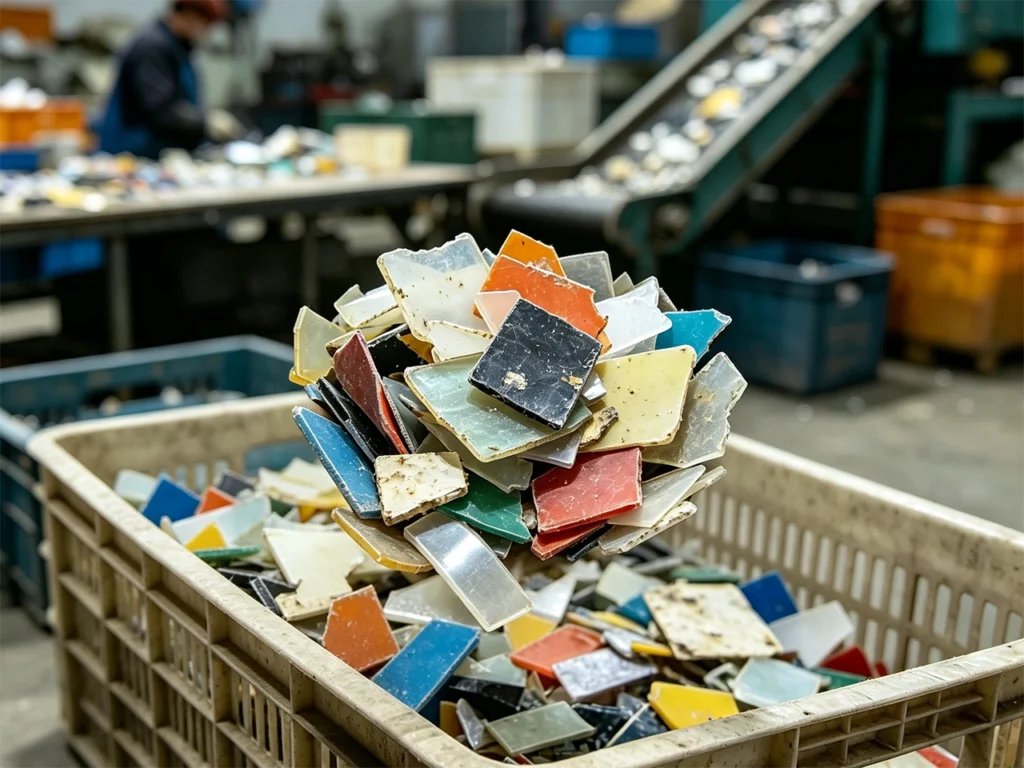
Non-metallic fraction containing resin-rich PCB material separated from conductive particles.
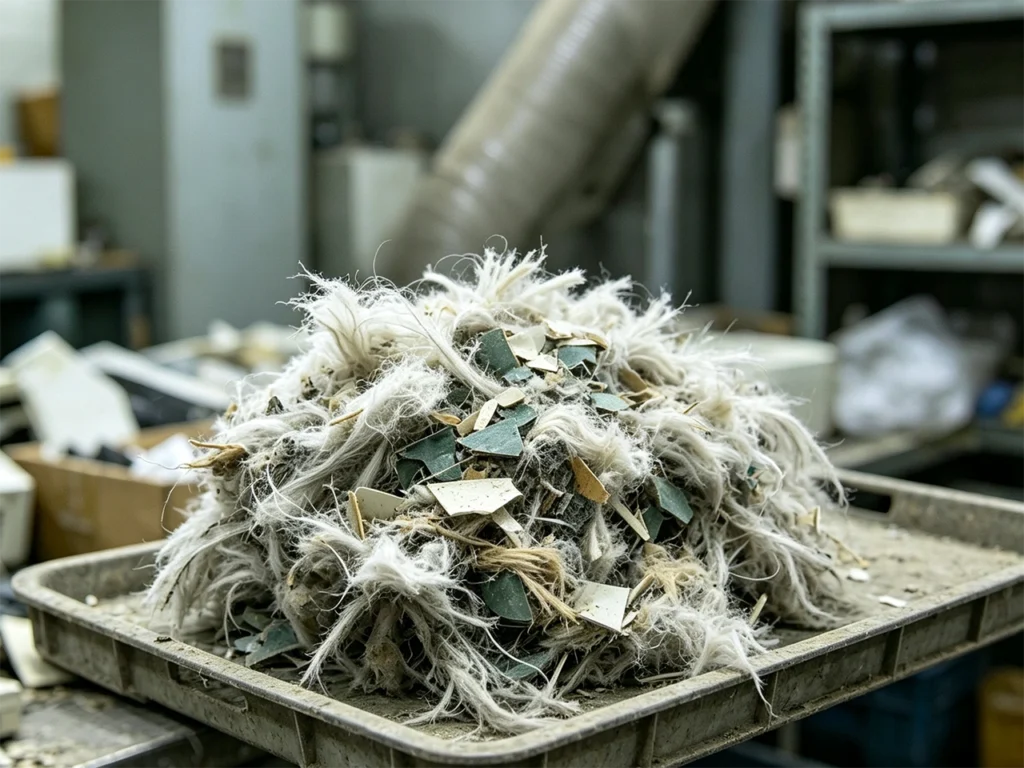
Glass-fiber-rich non-metallic material separated from liberated PCB fractions.
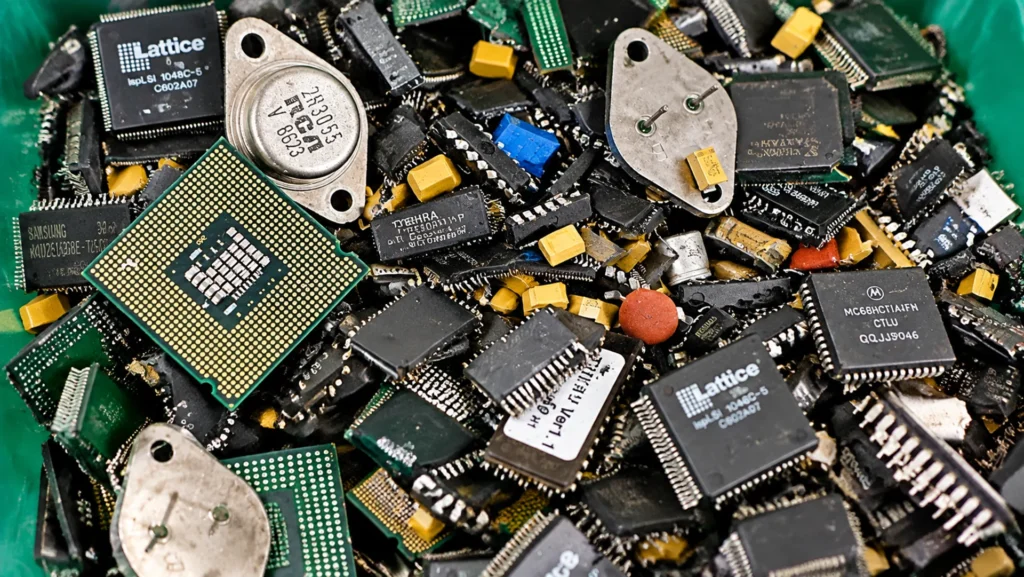
Components removed from populated boards before crushing where front-end dismantling is included in the selected process route.
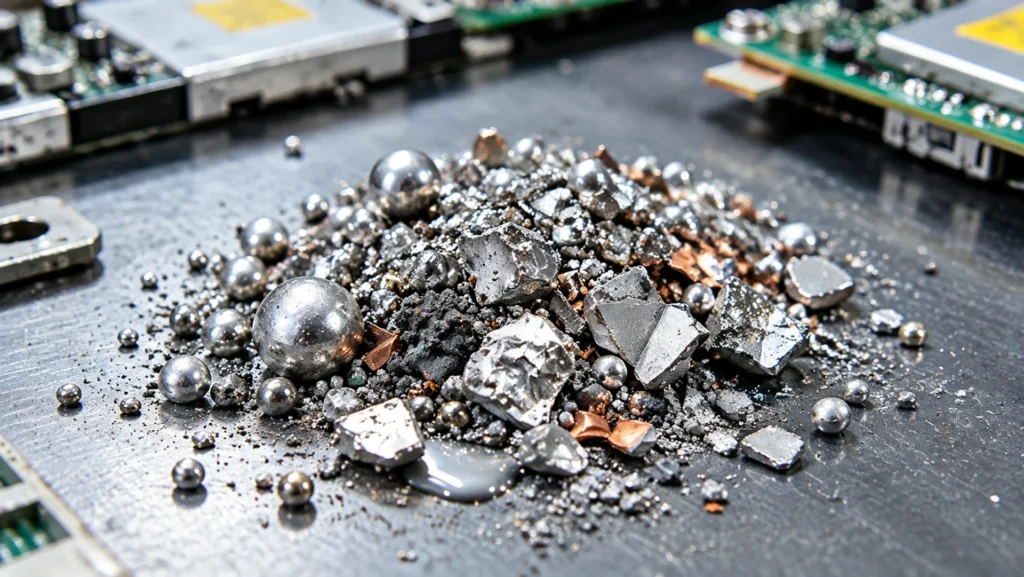
Solder and fine metal-bearing material that may be collected separately depending on feedstock, dismantling method and equipment configuration.
This is recommended process logic, not a fixed production line. Component removal, crushing stages and separation methods are adjusted according to feedstock condition and recovery objectives.
Confirm PCB type, component condition, laminate structure, contamination, board size and target recovered fractions before selecting the final process route.
Remove mounted components or soldered assemblies where front-end dismantling improves downstream processing or enables separate component recovery.
Reduce prepared PCBs or stripped substrates to a controlled size suitable for secondary liberation.
Further liberate copper-bearing particles from resin and fiber so physical separation stages can work more effectively.
Classify the material by particle size and use gravity, airflow or other suitable dry separation methods to separate different fractions.
Improve metal / non-metal separation where appropriate and collect the resulting copper-rich, resin/fiber-rich and fine fractions separately.
Stages can be added, skipped or reordered after feedstock characterization and project review.
Coordinate enclosed conveying, negative-pressure handling and dust collection around pulverizing and classification stages.
Recommended production lines provide complete processing configurations that can be adapted to PCB type, component condition, required capacity and target recovered fractions.
Share PCB type, component condition, capacity, desired recovered fractions and site constraints so BREM can prepare a technical proposal.
You don't need to know all the technical details. Tell us what you're working with and what you want to achieve, and our team will help you determine the next step.