
01
Dust-Laden Air Inlet
Dust-laden process air enters through the side inlet and is directed into the lower filtration chamber.
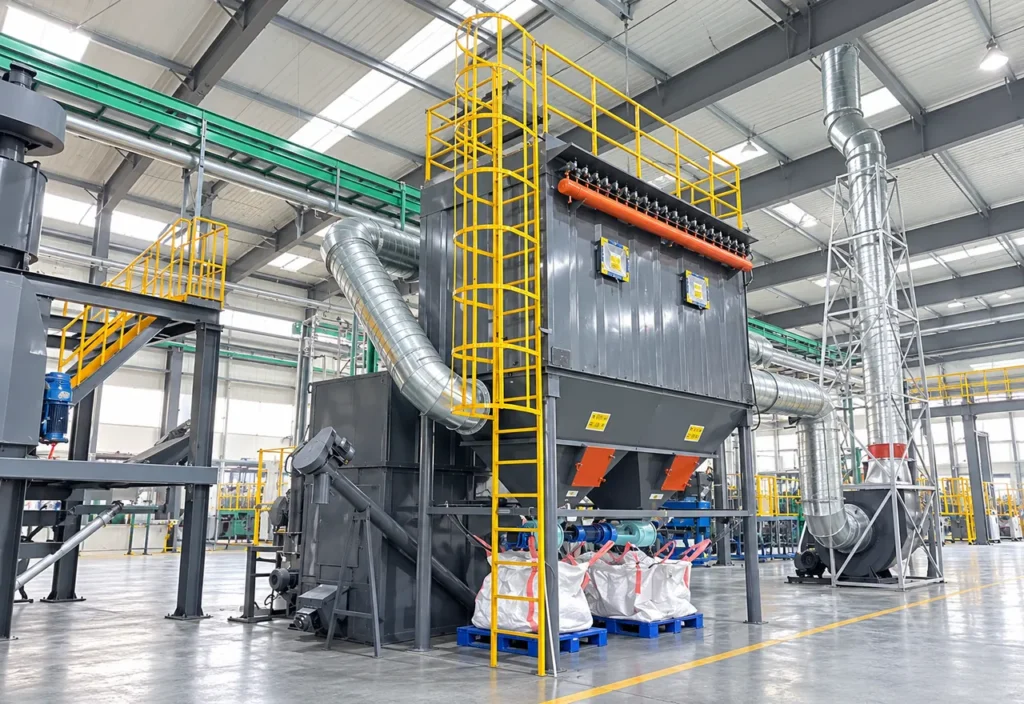
The BREM Pulse Jet Baghouse Dust Collector is a dry filtration system designed to capture fine, non-fibrous particulate from industrial process air. Dust-laden air enters the collector housing, where heavier particles can settle toward the hopper under gravity while finer particles are retained on the outer surface of the filter bags.
Continuous dry fabric filtration with on-line compressed-air pulse cleaning for compatible non-fibrous process dust.
The BREM Pulse Jet Baghouse Dust Collector is a dry filtration system designed to capture fine, non-fibrous particulate from industrial process air. Dust-laden air enters the collector housing, where heavier particles can settle toward the hopper under gravity while finer particles are retained on the outer surface of the filter bags. As dust accumulates, resistance across the filter section rises. A pulse-cleaning system periodically injects compressed air into the filter bags to detach accumulated dust and restore filtration performance. Released dust falls into the hopper for controlled discharge, while filtered air exits through the clean-air section. The collector is suited to continuous dry dust-control duties in recycling, crushing, pulverizing, screening, conveying and material-handling systems where the dust characteristics are compatible with fabric filtration.
Airflow, filter area, bag quantity, air-to-cloth ratio, compressed-air pressure, fan and hopper discharge are model- or project-dependent in the source table.
02 / Operating Principle
Dust-laden air enters the collector through the inlet duct and is distributed into the baghouse chamber. As the airflow passes through the filter bags, dust is retained on the outer bag surfaces while cleaned air moves into the clean-air section and exits through the outlet. At intervals, compressed-air pulses clean the bags and dislodge the accumulated dust into the hopper for discharge.
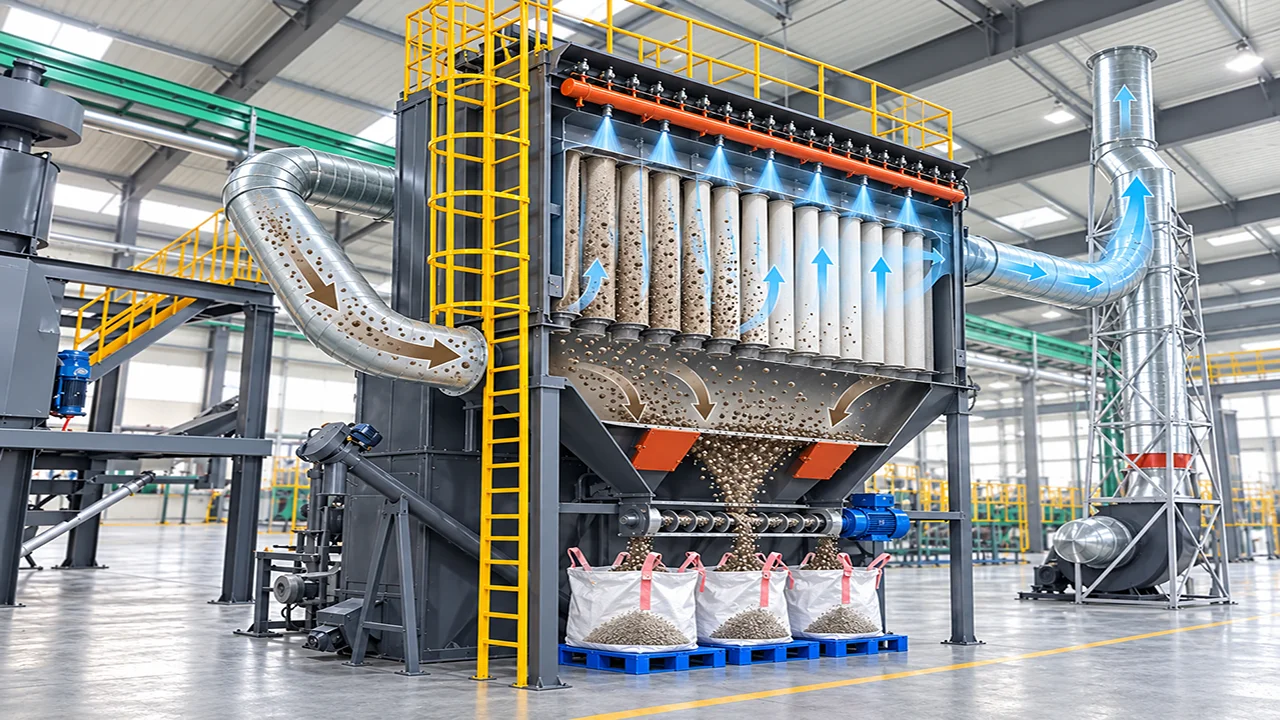
Dust-laden process air enters through the side inlet and is directed into the lower filtration chamber.
The airflow passes through the filter bags, where dust particles are captured on the bag surfaces while cleaned air moves upward.
Compressed-air pulses are released through the blow pipes to flex the filter bags and dislodge accumulated dust from their surfaces.
Dislodged dust falls into the lower hopper and is discharged through the bottom outlet for collection and downstream handling.
Non-fibrous process dust from crushing, pulverizing, screening, conveying and dry recycling.
Crushing, pulverizing, screening, conveying and black-mass handling where fabric filtration is suitable.
Crushing, milling, screening and material-transfer dust.
Transfer points, hoppers, elevators, screw conveyors, bagging stations and bin or silo tops.
04 / Machine Architecture
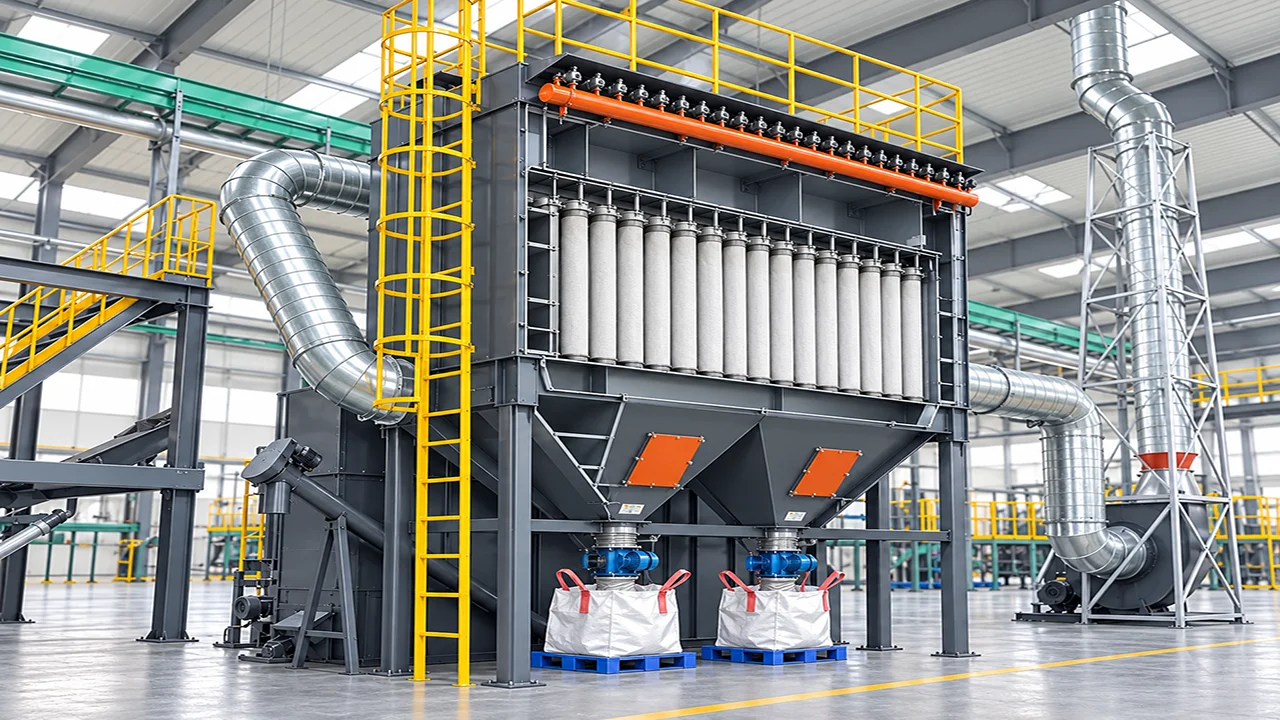
Encloses dirty-air and clean-air chambers.
Inlet path, filtration zone and clean-air outlet path.
Fabric filtration surface; media selected according to process conditions.
Deliver the pulse into each bag.
Sequential on-line cleaning.
Stores and distributes cleaning air.
Collects detached dust; discharge method is model dependent.
Maintenance access and induced-draft fan interface.
Monitoring of filtration resistance; configuration dependent.
Filter bags retain dust on the outer surface. Compressed-air pulse jet cleaning expands the bags and induces reverse flow so dust falls to the hopper without stopping filtration.
| Parameter | Specification |
|---|---|
| Equipment type | Pulse jet baghouse dust collector |
| Filtration method | Dry filter-bag filtration |
| Cleaning method | Compressed-air pulse jet |
| Airflow and dust concentration | Project dependent / engineering confirmation required |
| Filter area, bag quantity and dimensions | Model dependent |
| Filter media | Selected according to process conditions |
| Air-to-cloth ratio | Engineering design value |
| Pulse valves and compressed-air pressure | Model dependent / engineering confirmation required |
| Differential-pressure monitoring | Configuration dependent |
| Fan | Optional / project dependent |
| Hopper and discharge | Model dependent; manual / rotary / screw / bulk bag |
| Inlet and outlet diameter | Project specific |
| Operating temperature | Filter-media dependent |
| Overall dimensions and weight | Model dependent |
Table transcribed from content.md. Numeric airflow, filter area and pressure values were not present and were not guessed.
Dry dust extraction from crushing, pulverizing, screening, conveying and black-mass handling where fabric filtration is suitable.
Fine particulate from crushing, milling, screening and transfer.
Centralized extraction for compatible dry size-reduction processes.
Collection at transfer points, hoppers, elevators, screws, bagging and silo tops.
Dry particulate from compatible crushing, grinding and screening.
It is mainly intended for compatible dry, fine, non-fibrous particulate.
Compressed air expands the filter bags and induces reverse airflow, detaching accumulated dust into the hopper.
Depending on configuration, pulse cleaning can be performed during normal operation.
Not automatically. Such dusts require material-specific filtration, moisture and safety engineering.
Most centralized extraction systems require a fan, but the final selection depends on airflow and total system resistance.
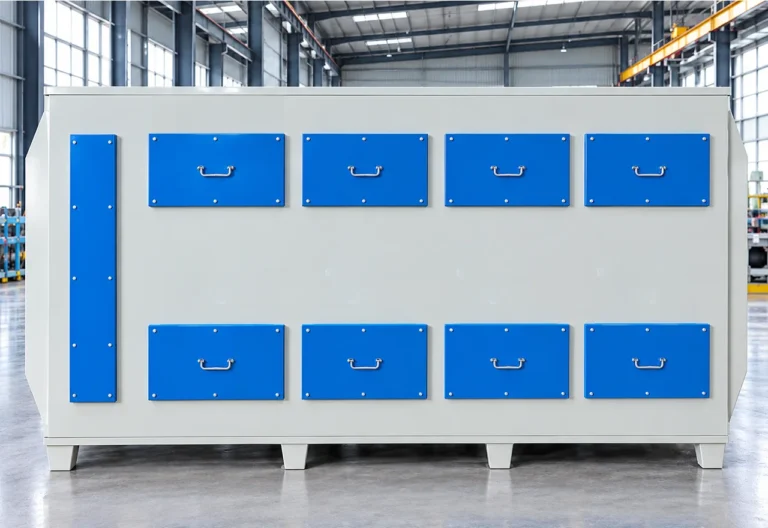
The Activated Carbon Adsorption System is an industrial exhaust-gas treatment unit designed to remove selected volatile organic compounds (VOCs) and odorous pollutants from process…
View Equipment →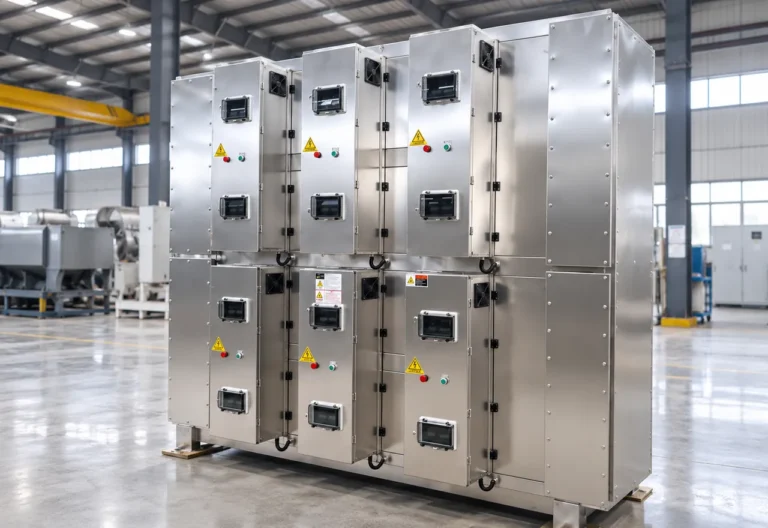
The Industrial Oil Fume Purification Equipment is designed to treat oil mist, fine aerosol, smoke and selected suspended particulate generated by industrial thermal and…
View Equipment →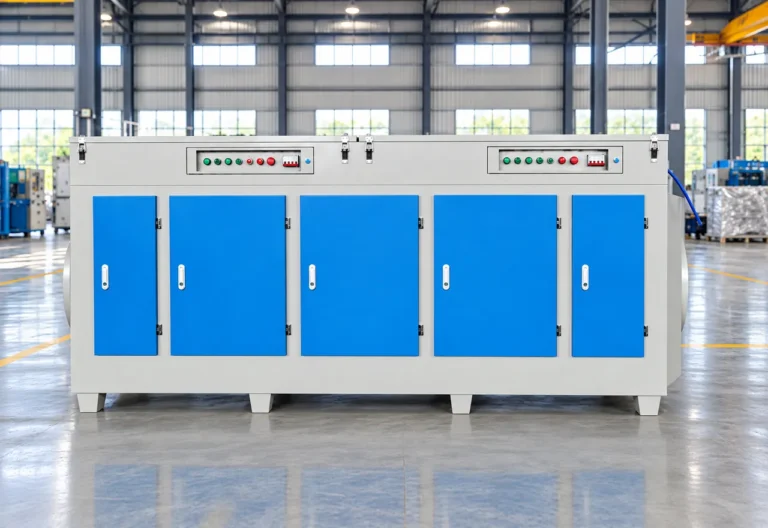
UV Photolysis Purification Equipment is designed for selected industrial exhaust streams containing odor compounds and gaseous organic contaminants.
View Equipment →Send material, capacity, target output and site information for an application review.
You can also upload material photos, equipment images, plant layouts or technical documents.
You don't need to know all the technical details. Tell us what you're working with and what you want to achieve, and our team will help you determine the next step.