
01
Contaminated Gas Inlet
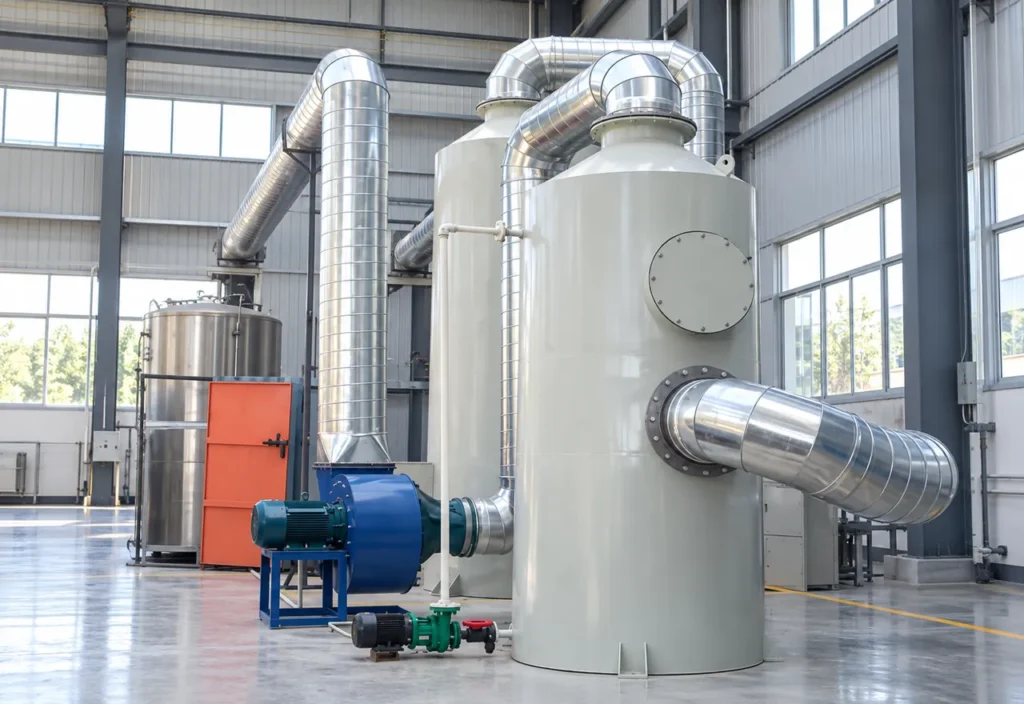
Contaminated exhaust enters through the side duct and is directed into the lower section of the scrubber tower.
The BREM Water Spray Scrubber is a wet exhaust-treatment system designed to remove suitable particulate matter, soluble gaseous contaminants and selected acid or alkaline pollutants from industrial exhaust streams. Contaminated gas comes into intensive contact with recirculated liquid through spray nozzles, packing media or other gas-liquid contact structures.
Auxiliary wet exhaust treatment for compatible particulate, soluble gas and selected acid or alkaline pollutants. Not an automatic substitute for a dry baghouse on high dry-powder loading.
The BREM Water Spray Scrubber is a wet exhaust-treatment system designed to remove suitable particulate matter, soluble gaseous contaminants and selected acid or alkaline pollutants from industrial exhaust streams. Contaminated gas comes into intensive contact with recirculated liquid through spray nozzles, packing media or other gas-liquid contact structures. During this process, particulate can be captured by liquid droplets, while soluble or chemically reactive gaseous pollutants can be absorbed or neutralized by the selected scrubbing solution. The liquid is collected at the bottom of the tower and pumped back to the spray system for reuse. Water, a compatible alkaline solution, a compatible acidic solution or another engineered absorption liquid may be selected according to the actual exhaust chemistry.
Empty-tower gas velocity of approximately 1-6 m/s is a source reference; final design is required. Removal efficiency is not guaranteed in the source table.
02 / Operating Principle
Contaminated exhaust enters the scrubber through the side inlet and flows upward through the treatment tower. Multiple spray stages generate fine water droplets that contact the gas stream and capture dust and soluble contaminants, while the packing section increases gas-liquid contact. The cleaned gas passes through the upper mist-removal section and exits through the top outlet, while the scrubbing liquid is collected in the lower sump for recirculation.
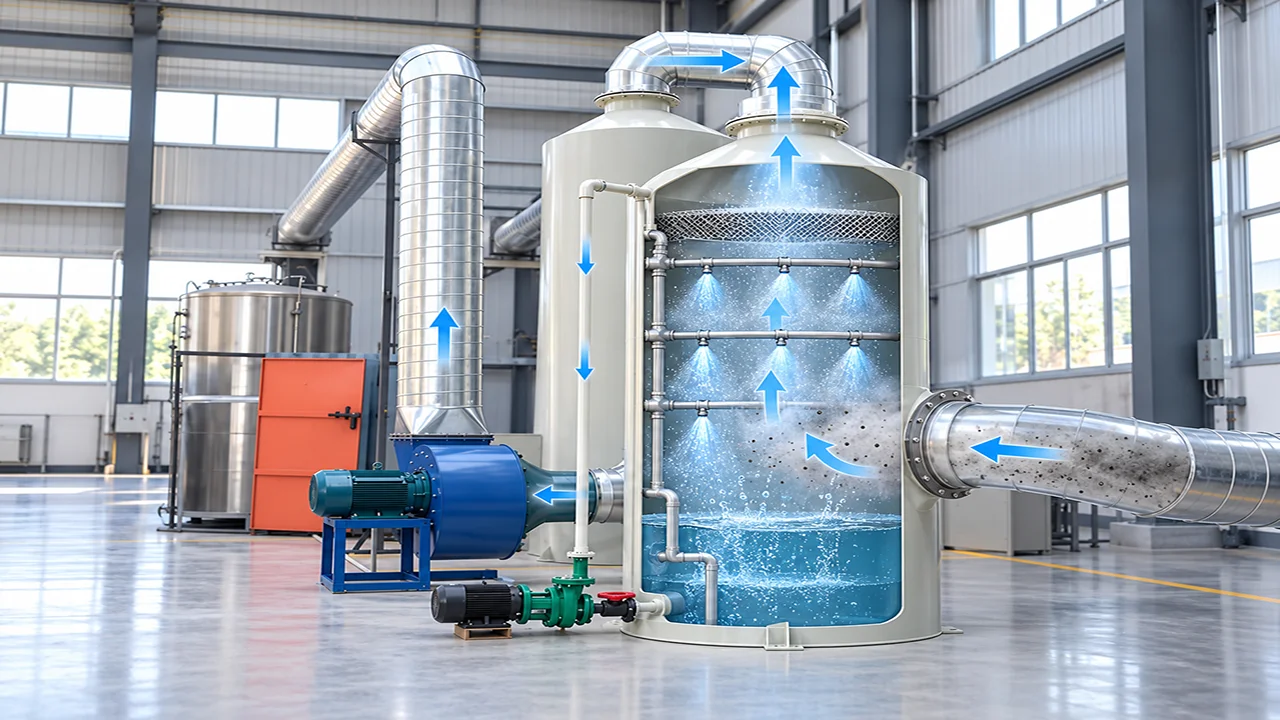
Contaminated exhaust enters through the side duct and is directed into the lower section of the scrubber tower.
Spray nozzles distribute water into the gas stream, where droplets contact and capture suspended dust and soluble contaminants.
The gas continues upward through the packing and mist-removal sections, improving contact while reducing entrained droplets before discharge.
After treatment, the cleaned gas exits through the top duct while the scrubbing liquid returns to the lower sump for recirculation.
Not automatically the primary collector for every dry battery-crushing line.
Absorption into water or a compatible solution.
Using selected alkaline chemistry.
Using selected acidic chemistry.
Where water or chemical absorption is effective.
Droplet size, loading and fouling potential must be reviewed.
04 / Machine Architecture
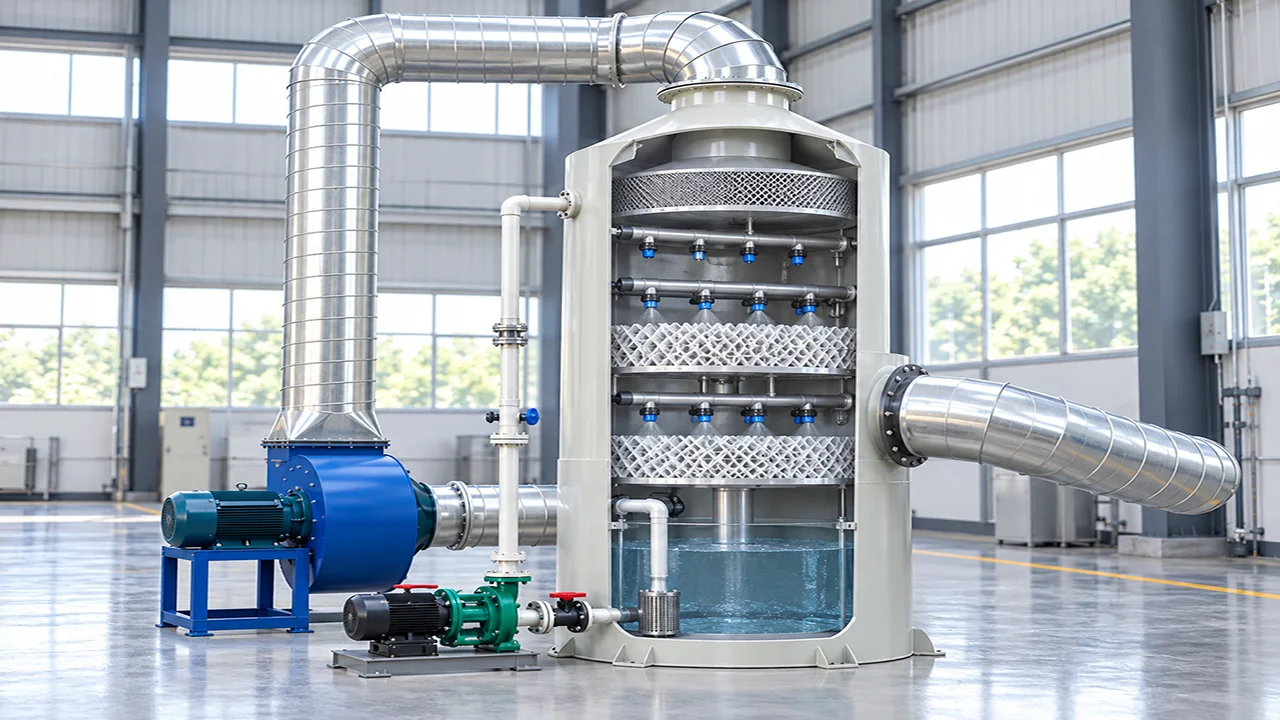
Receives the incoming exhaust stream and directs it into the lower section of the scrubber tower.
Distributes scrubbing liquid through multiple nozzles across the internal gas path for uniform contact.
Provides an extended gas-liquid contact surface to improve capture of dust and soluble contaminants.
Removes entrained liquid droplets from the treated gas before it leaves the upper section of the tower.
Guides the treated gas from the top of the scrubber toward the downstream exhaust system.
Collects scrubbing liquid in the lower tower section for reuse within the recirculation loop.
Returns collected scrubbing liquid from the sump to the spray manifold for continuous circulation.
Maintains the required exhaust flow through the scrubber and downstream ductwork.
Contaminated gas contacts recirculated liquid through spray nozzles and, when specified, packing media. Particulate can be captured by droplets; soluble or reactive gases can be absorbed or neutralized. A mist eliminator is used before discharge.
| Parameter | Specification |
|---|---|
| Equipment type | Wet spray scrubber |
| Tower configuration | Open spray / packed-bed / multi-stage |
| Construction material | FRP / PP / stainless steel, project dependent |
| Airflow, tower diameter and height | Engineering confirmation required |
| Empty-tower gas velocity | Approx. 1-6 m/s source reference; final design required |
| Liquid circulation and liquid-to-gas ratio | Engineering confirmation required |
| Pump power, nozzle, packing and bed depth | Application dependent |
| Pressure drop and mist eliminator | Engineering confirmation required / configuration dependent |
| Scrubbing solution | Water or compatible chemical solution |
| pH control, make-up water and blowdown | Project dependent |
| Removal efficiency | Engineering and test confirmation required |
Table transcribed from content.md. Numeric airflow, diameter, height, pump power and efficiency were not present as verified values and were not guessed. The 1-6 m/s velocity is a source reference only.
Soluble gas, selected acidic exhaust, wet particulate, odor or process-gas cooling.
Compatible soluble or reactive gases.
Where wet chemistry is appropriate.
Where water or chemical absorption is effective.
After composition review.
Suitable particulate, water-soluble gases and selected reactive gaseous contaminants may be treated depending on the liquid chemistry.
No. Some contaminants require chemical absorption or neutralization, while many VOCs are poorly removed by water alone.
A packed-bed scrubber adds wetted packing to increase gas-liquid contact area and mass transfer.
Yes. Captured contaminants accumulate in circulating liquid and may require controlled blowdown and wastewater treatment.
Only values in the final approved engineering proposal or supported by testing should be treated as guaranteed.
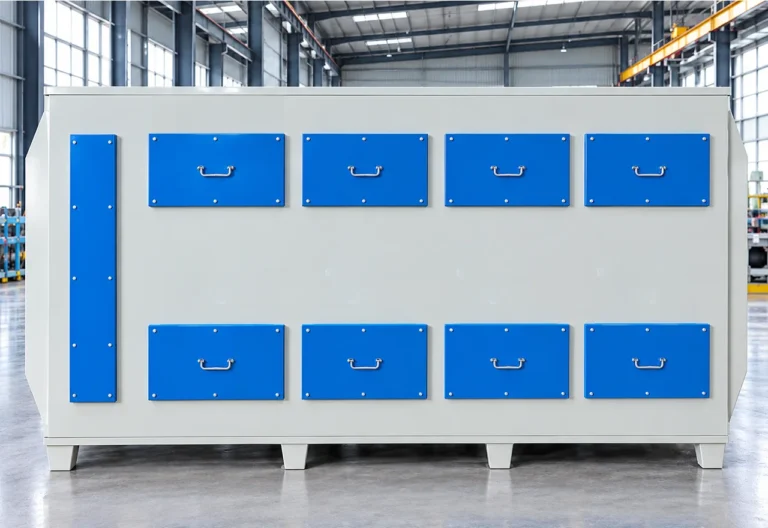
The Activated Carbon Adsorption System is an industrial exhaust-gas treatment unit designed to remove selected volatile organic compounds (VOCs) and odorous pollutants from process…
View Equipment →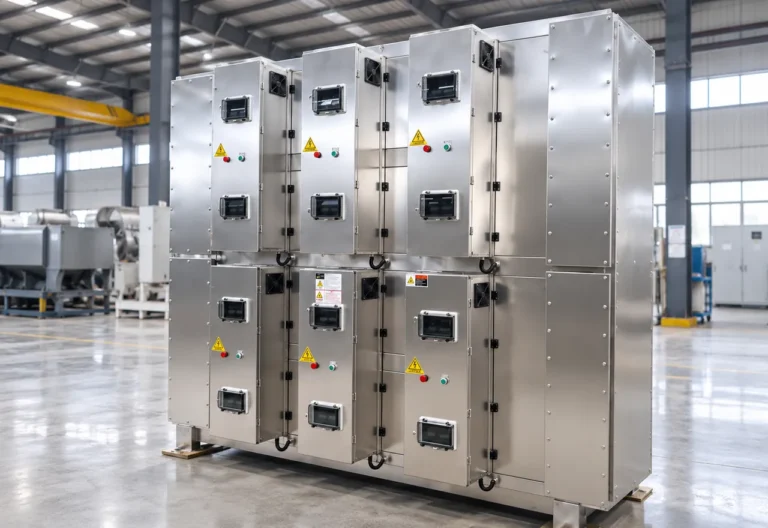
The Industrial Oil Fume Purification Equipment is designed to treat oil mist, fine aerosol, smoke and selected suspended particulate generated by industrial thermal and…
View Equipment →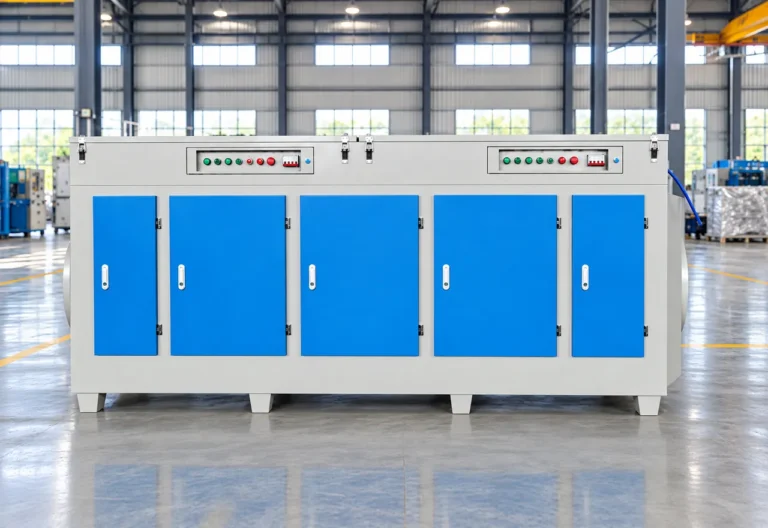
UV Photolysis Purification Equipment is designed for selected industrial exhaust streams containing odor compounds and gaseous organic contaminants.
View Equipment →Send material, capacity, target output and site information for an application review.
You can also upload material photos, equipment images, plant layouts or technical documents.
You don't need to know all the technical details. Tell us what you're working with and what you want to achieve, and our team will help you determine the next step.