Copper-Clad Laminate Scrap
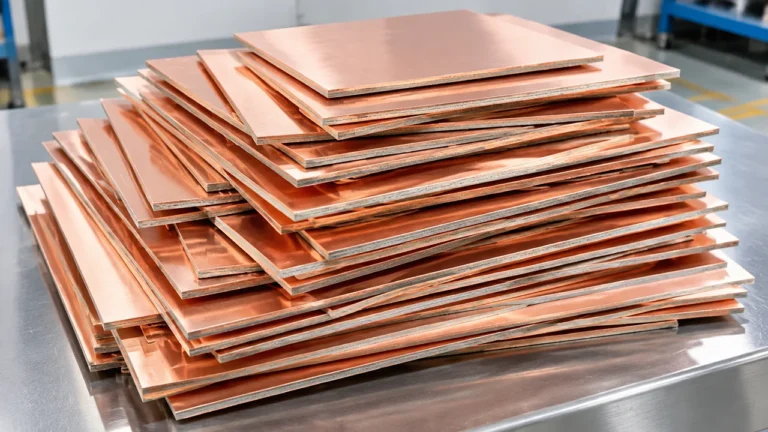
Bare copper-clad laminate, offcuts, trimming scrap and other copper-laminated board material from PCB manufacturing. Typical forms: copper-clad laminate offcuts; bare board scrap; edge trim; production rejects.
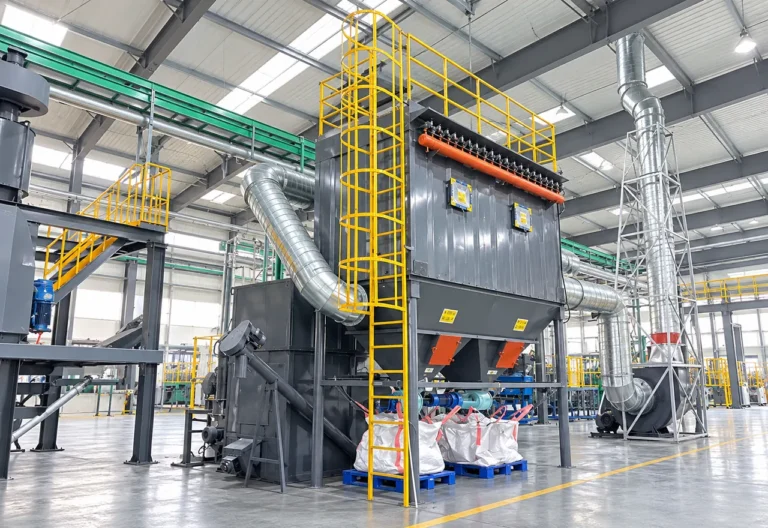
A dry mechanical recycling system for separating copper-rich metal fractions from resin and fiber in copper-clad laminate, PCB production scrap and prepared circuit-board material. The line combines staged crushing, pulverizing, classification, electrostatic separation and centralized dust collection. Available in configurable throughput ranges for different feed sizes and board types, with equipment selection based on material composition, required capacity, target metal grade and final non-metal fraction quality. Final configuration is confirmed after reviewing board type, copper content, component condition, feed dimensions, capacity target and required output quality.
Copper-clad laminate and prepared PCB / PC board scrap — not whole-appliance dismantling or chemical leaching.
Copper-clad laminate and PCB scrap are composite materials containing conductive metal layers together with resin and fiber-based non-metal substrates. BREM configures the line to mechanically liberate these materials and separate conductive metal-rich particles from non-metal fractions through a dry physical process.
The supplied process uses crushing and pulverizing to reduce the board material and expose the different components. After liberation, the crushed material passes through classification and high-voltage electrostatic separation so that conductive metal-rich particles and non-conductive resin/fiber fractions can be collected separately.
The process can be applied to copper-clad laminate, PCB production edge trim, computer boards, television boards, circuit-control boards and other reviewed circuit-board materials. Feedstock containing large mounted components should be evaluated before final line selection because upstream dismantling or coarse crushing may be required.
Compared with a wet chemical route, the source process is based on dry mechanical separation. The engineering focus is therefore on controlled size reduction, sufficient metal/non-metal liberation, stable classification, electrostatic separation and dust capture.
01 — Metal / Non-Metal Liberation: Staged crushing and pulverizing expose copper-rich particles from resin and fiber substrates before final separation.
02 — High-Voltage Electrostatic Separation: Conductivity differences between metal and non-metal particles are used to separate copper-rich material from resin/fiber fractions.
03 — Dry Physical Process: The core process uses mechanical and electrostatic separation rather than chemical leaching in the main recycling line.
04 — Configurable Throughput: The supplied source documents reference configurations for approximately 500–600 kg/h and 1000–1500 kg/h processing ranges.
This page describes a copper-clad laminate / PCB dry recycling route. It is not a lithium-battery line, whole-appliance e-waste dismantling line, hydrometallurgical copper process, precious-metal refining line or smelting line.
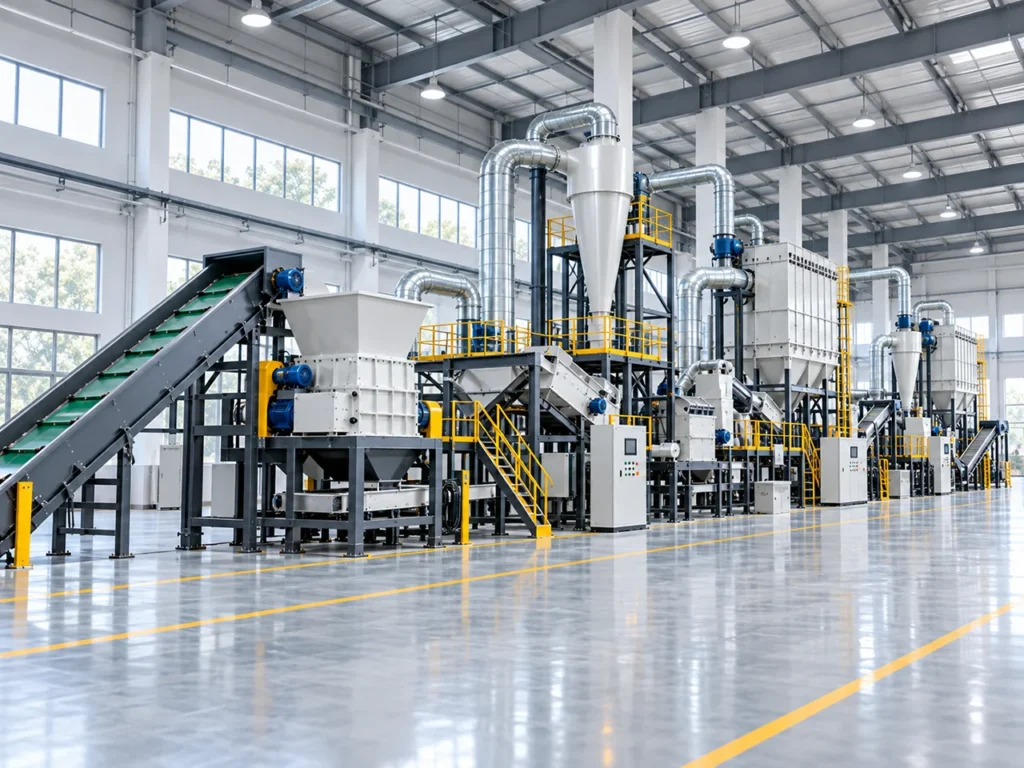
Feed composition, copper loading, resin/fiber content, board thickness and component condition affect crushing requirements and electrostatic-separation performance.
Bare copper-clad laminate, offcuts, trimming scrap and other copper-laminated board material from PCB manufacturing. Typical forms: copper-clad laminate offcuts; bare board scrap; edge trim; production rejects.
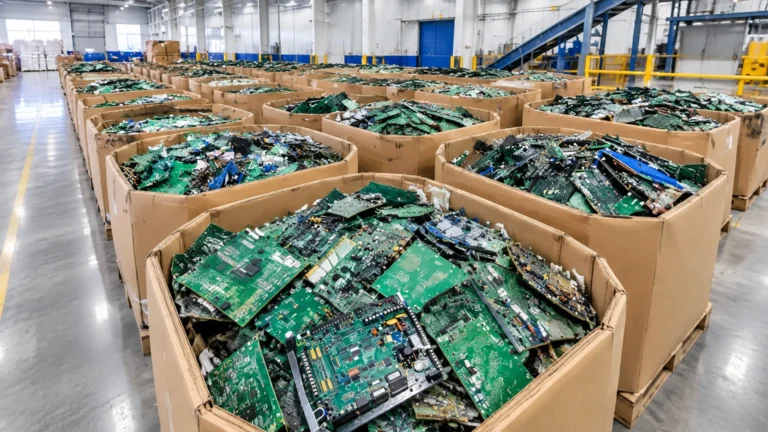
Prepared printed circuit-board material that has been reviewed for the dry crushing and electrostatic-separation process. Typical forms: computer boards; television boards; circuit-control boards; prepared PCB scrap.
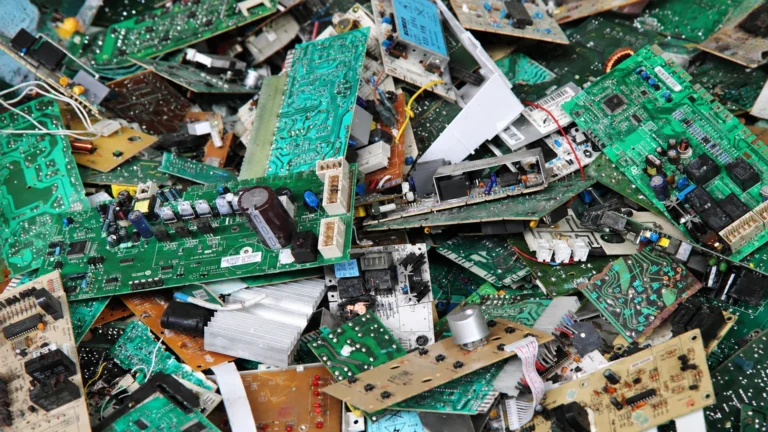
The supplied source states that the line can be compatible with various circuit boards containing capacitor components. Actual boards with mounted electronic components should be reviewed to determine whether dismantling or coarse crushing is required before the main pulverizing stage.
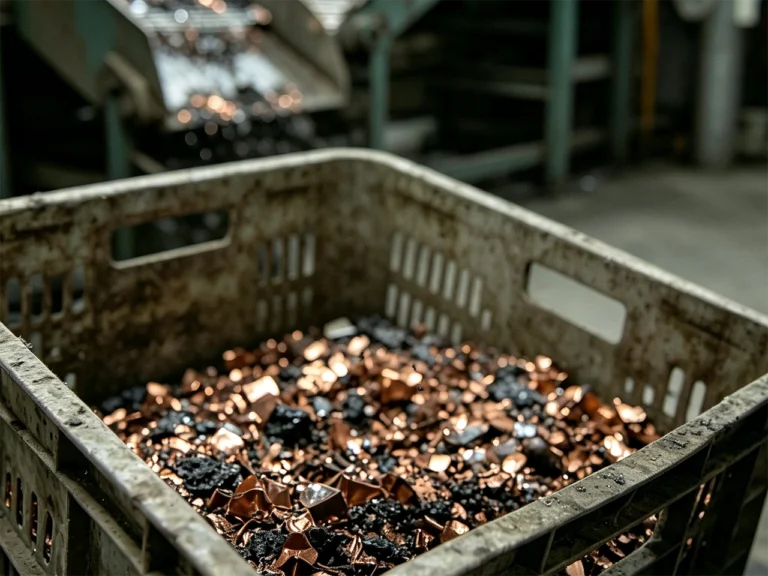
Conductive metal-rich particles separated from the non-metal fraction through classification and high-voltage electrostatic separation. The source reports that the recovered metal powder can contain more than 98% copper under the referenced process conditions — published here as Reference Process Data only.
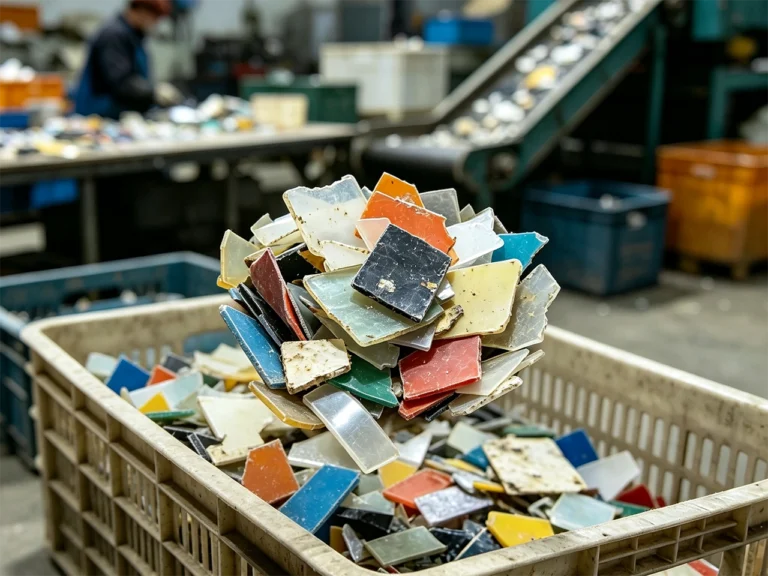
A non-metal fraction containing resin material separated from the conductive metal-rich stream. The source notes potential use in products such as wood-plastic materials, composite boards or filler applications, subject to downstream qualification.
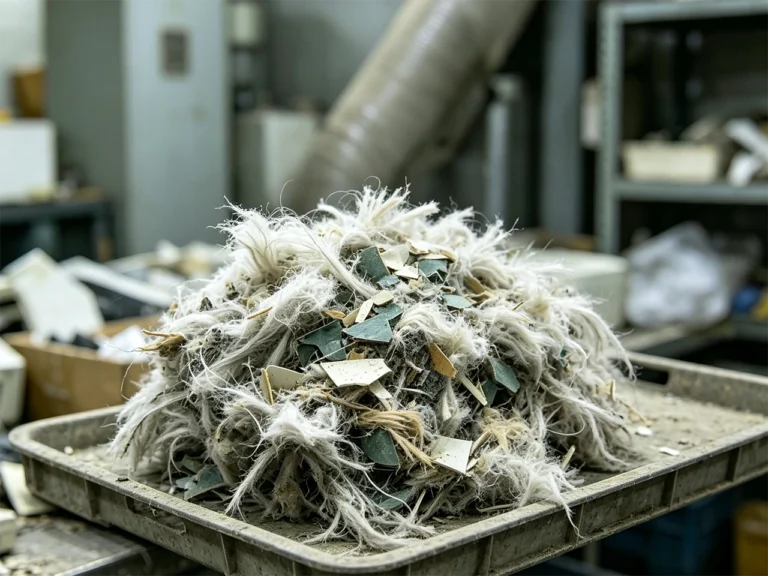
A non-metal fiber-containing fraction separated from the circuit-board composite material. The source mentions insulation-material applications as a potential downstream use, subject to material testing and local requirements.
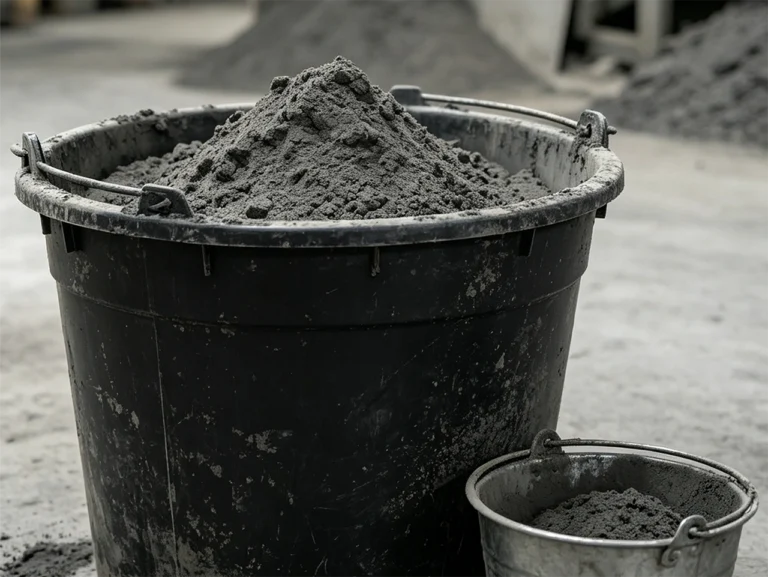
Fine particulate recovered by the line's dust-control system and managed separately according to composition, process balance and downstream handling requirements.
Whole electronic appliances, batteries, large transformers, excessive steel hardware, hazardous components and unreviewed mixed e-waste must not be assumed to be direct feed for this page. Upstream dismantling and hazardous-component removal may be required. The source-reported >98% copper figure is Reference Process Data only; actual metal composition depends on feedstock, liberation quality, particle-size distribution, separation settings and the presence of other conductive metals.
The process uses staged size reduction and dry physical separation. Larger or component-bearing boards may require coarse crushing first, while finer prepared material can enter the pulverizing and classification stages directly.
Staged crushing and classification liberate conductive metal from resin/fiber substrate before high-voltage electrostatic separation.
Incoming copper-clad laminate or PCB scrap is checked for board type, mounted components, large metal parts and incompatible materials. Oversized or component-bearing boards may require upstream dismantling or coarse crushing.
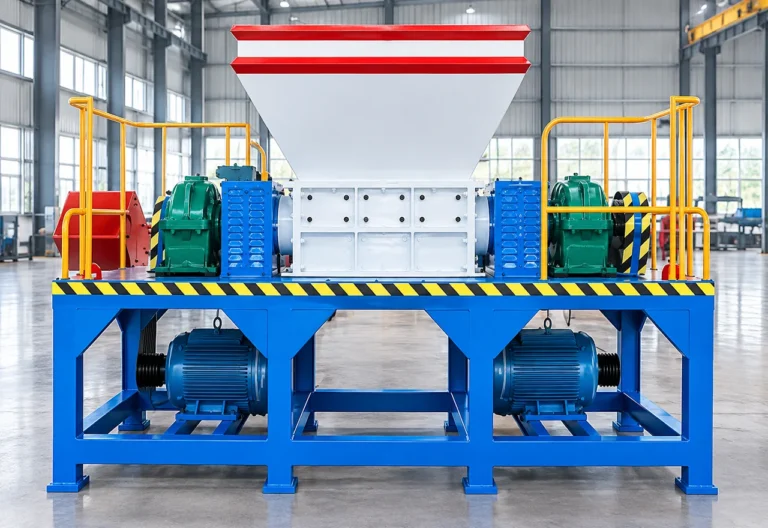
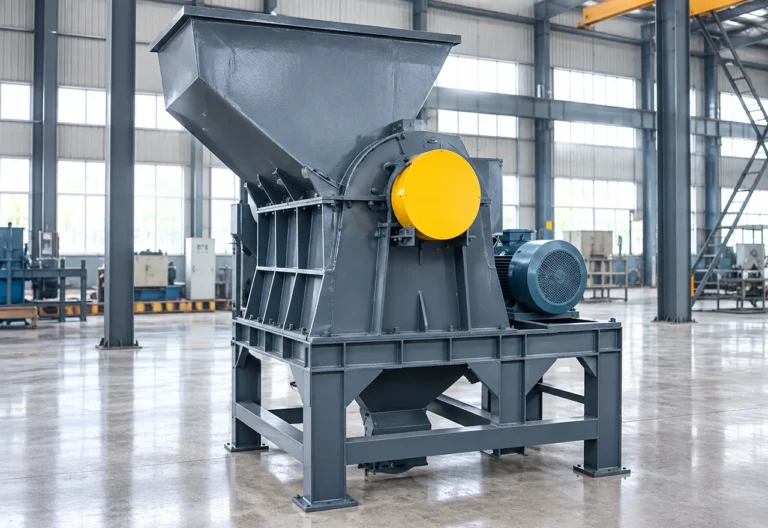
For larger PCB scrap, a primary shredding or hammer-crushing stage reduces board size and prepares the material for controlled fine pulverizing. Smaller prepared copper-clad laminate scrap may enter the fine-crushing stage directly.
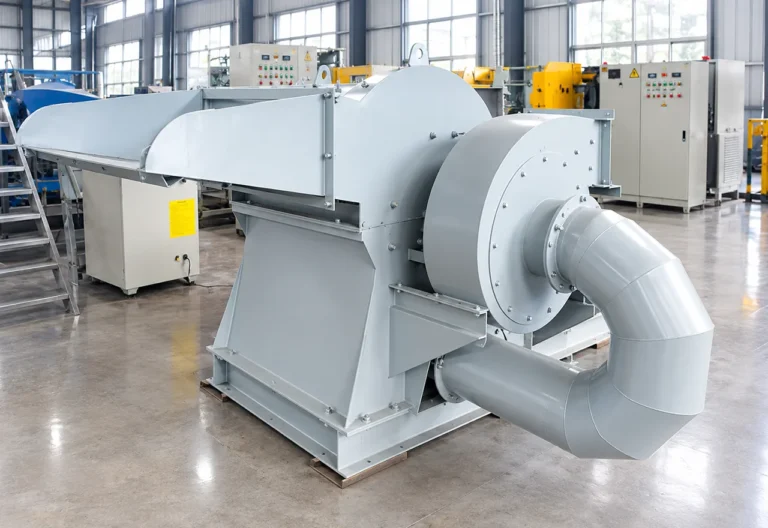
The board material is further reduced so that copper-rich metal particles become mechanically liberated from resin and fiber substrate material.
An analyzer / classifier controls particle movement and helps separate fine material by aerodynamic behavior before downstream collection and electrostatic processing.
Cyclone-based unloading and multi-stage cyclone collection recover entrained material from the process-air stream and stabilize material transfer through the system.
Material is classified to maintain a suitable particle-size range for electrostatic separation. Stable size distribution improves separation consistency between conductive and non-conductive particles.
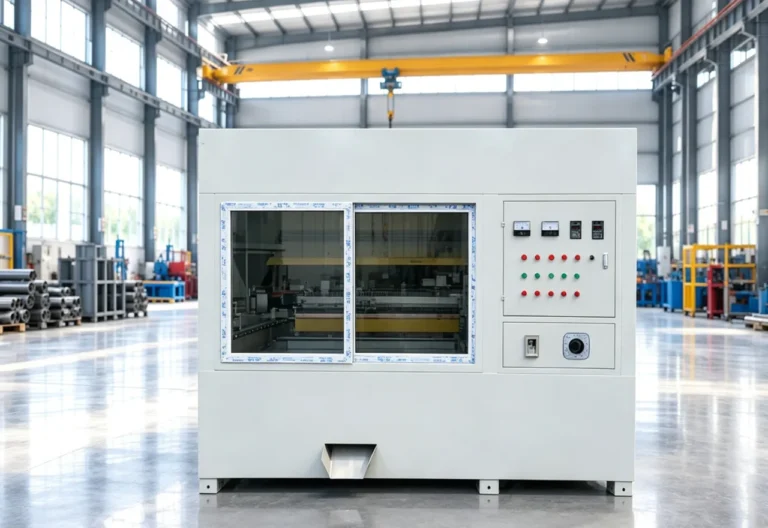
Conductive metal-rich particles and non-conductive resin/fiber particles respond differently in the electrostatic field, allowing the material streams to be separated without wet chemical treatment.
Recovered conductive particles are collected as a copper-rich metal fraction for downstream metal recovery, refining or further sorting according to the required specification.
Separated non-metal material is collected independently for downstream reuse, further classification or disposal according to its verified composition and local requirements.
Dust-control equipment collects fine particulate generated during crushing, conveying and classification. The final collection system must be selected according to the actual dust load and emission requirements.
The exact equipment sequence differs between the source's lower-capacity and higher-capacity configurations. The 1000–1500 kg/h configuration includes additional coarse size-reduction equipment before the fine pulverizing and electrostatic-separation stages.
The equipment combination is selected according to incoming board size, component content, throughput and required separation quality. Higher-capacity layouts typically add shredding and hammer crushing ahead of fine pulverizing.
Source-specific supporting components that may not have independent Product CPT entries include: analyzer / classifier (SX-800), cyclone unloader (SX-800), four-stage cyclone unloader (SX-1600), bucket elevators (SX-180 / SX-220), classifier / grader (SX-1000), silo / storage bin, conveyors and three-in-one dust collectors (SX-1500). These are represented as line-engineering components. Do not invent Product records for them. Vibratory separators are omitted unless a current BREM engineering configuration specifically includes them.
The supplied source includes two equipment configurations. Values below are Reference Configurations from the equipment material and must be confirmed by BREM engineering before quotation or contract commitment.
| Parameter | Specification |
|---|---|
| Processing Capacity | Reference: 500–600 kg/h or 1000–1500 kg/h depending on configuration — project capacity confirmed after material review |
| Applicable Feedstock | Copper-clad laminate, prepared PCB / PC board scrap, edge trim and reviewed circuit-board material |
| Applicable Battery Chemistry | Copper-clad / PCB composites (copper + resin + fiber; other conductive metals if present) |
| Processing Method | Dry mechanical crushing + classification + high-voltage electrostatic separation + dust collection |
| Recovered Fractions | Copper-rich conductive metal fraction + resin-rich fraction + fiber-rich fraction + collected fines |
| Automation Level | PLC / coordinated electrical control |
| Installed Power | Reference totals: 66 kW (500–600 kg/h config) or 172 kW (1000–1500 kg/h config) — not a universal project total |
| Typical Floor Space | Reference footprints: approximately 95 m² or 200 m² depending on source configuration |
| Operating Mode | Continuous dry mechanical and electrostatic separation |
| Dust Control | Cyclone collection + enclosed / negative-pressure transfer + bag / pulse dust collection |
| Exhaust Treatment | Project-specific; expand only when feedstock testing or local requirements indicate additional air treatment |
| Utilities | Power supply, compressed air (as required by dust collectors) and plant utilities confirmed before final design |
REFERENCE CONFIGURATIONS FROM SUPPLIED MATERIAL (not universal guaranteed performance):
Reference Configuration A — 500–600 kg/h | Total power 66 kW | Footprint ≈ 95 m²
• Pulverizer SX-700 — 55 kW × 1 — 2 × 2 × 1.7 m
• Analyzer SX-800 — 1.1 kW × 1 — 1.2 × 1.2 × 4 m
• Cyclone unloader SX-800 × 1 — 1 × 1 × 4 m
• Four-stage cyclone SX-1600 × 1 — 1.8 × 1.6 × 4 m
• Three-in-one dust collector SX-1500 × 1 — 1.5 × 1.5 × 5.5 m
• Bucket elevator SX-180 — 1.1 kW × 3 — 0.6 × 0.6 × 5.5 m
• Classifier SX-1000 — 0.37 kW × 1 — 3 × 1.5 × 3.5 m
• High-voltage electrostatic separator SX-1000-2 — 1.1 + 2.2 kW × 2 — 2 × 1.8 × 2.3 m
Reference Configuration B — 1000–1500 kg/h | Total power 172 kW | Footprint ≈ 200 m²
• Double-shaft shredder SX-600 — 22 kW × 1
• Hammer crusher SX-400 — 18.5 + 3 kW × 1
• Mining bucket elevator SX-220 — 2.2 kW × 1
• Storage bin SX-1000×3000 × 1 — 3 × 1.2 × 4 m
• Conveyor SX-600×4m — 1.1 kW × 2
• Pulverizer SX-700 — 55 kW × 2
• Analyzer SX-800 — 1.1 kW × 2
• Cyclone unloader SX-800 × 2
• Four-stage cyclone SX-1600 × 2
• Three-in-one dust collector SX-1500 × 2
• Bucket elevator SX-180 — 1.1 kW × 6
• Classifier SX-1000 — 0.37 kW × 2
• High-voltage electrostatic separator SX-1000-2 — 1.1 + 2.2 kW × 4
REFERENCE PROCESS DATA: source-reported metal powder copper content can exceed 98% under referenced process conditions — not a contractual universal guarantee. Capacities, model numbers, power values and footprints above are taken from the supplied equipment material. Current project specifications must be confirmed by BREM engineering before quotation or contract commitment.
The line is designed to separate conductive metal-rich particles from non-conductive circuit-board substrate material. Final output quality depends on feed composition, liberation degree, particle-size control and electrostatic-separation settings.
Conductive metal-rich particles separated from resin/fiber substrate through high-voltage electrostatic separation. The supplied source states that copper content in the metal powder can exceed 98% under the referenced process conditions.
A non-conductive resin-rich fraction separated from the metal stream. Potential reuse depends on verified material composition and downstream manufacturing requirements.
A non-metal fiber-containing fraction originating from the board substrate. The source notes possible use in insulation-related applications, subject to downstream qualification.
Fine particulate captured from crushing, classification and dust-control stages and handled separately according to its composition and downstream use.
Do not present “>98% copper” as a guaranteed universal product specification. It is labeled as source-reported Reference Process Data. Current material testing is required for contractual output guarantees.
PCB and copper-clad board recycling combines rotating crushing equipment, fine particulate handling and high-voltage electrostatic separation. The complete line therefore requires coordinated mechanical, electrical and dust-control safeguards.
Stable feeding prevents overload and limits sudden material surges through shredders, crushers, pulverizers and downstream separation equipment.
Drive protection, current monitoring and equipment interlocks protect the crushing stages against abnormal loading and material blockage.
Electrostatic separators require guarded high-voltage sections, access interlocks, grounding and safe shutdown procedures before inspection or maintenance.
Conductive equipment, ducting and collection systems should be correctly bonded and grounded to control static accumulation during dry powder handling.
Crushing and fine classification can generate combustible or hazardous mixed dust depending on feed composition. Dust characteristics and local codes must be reviewed when defining isolation, venting, suppression or other protection measures.
Sequential startup/shutdown, emergency-stop circuits, fault alarms and upstream/downstream interlocks coordinate the line and reduce unsafe operation during abnormal conditions.
PCB feedstock must be reviewed for batteries, large capacitors, hazardous components, mercury-containing parts, pressurized components, large steel parts or other incompatible materials before entering the recycling line.
The source emphasizes multi-stage dust handling with cyclone collection and bag-type filtration. Page copy uses engineering language — dust capture, controlled exhaust and enclosed transfer — without absolute emission claims.
Cyclone stages recover entrained particulate from process air and support stable material collection after crushing and classification.
Fine particulate is captured through centralized filtration equipment to reduce uncontrolled dust release around crushing and material-transfer points.
Induced airflow and enclosed ducting help move fine material through the process and maintain controlled negative pressure at key dust-generation points.
If the actual PCB feed contains coatings, resins or contaminants that generate additional gaseous emissions during processing, the exhaust-treatment system must be reviewed and expanded according to material testing and local environmental requirements.
Unsupported absolute emission or noise claims from legacy marketing copy are not used on this page. Emission performance is project-specific and must follow local environmental requirements.
Reference Configuration / Process Equipment Material — not a named customer case.
The lower-capacity reference configuration is centered on fine pulverizing, analysis/classification, cyclone unloading, particle grading and two high-voltage electrostatic separators. The source lists a reference capacity of 500–600 kg/h, total power of 66 kW and a footprint of approximately 95 m². The higher-capacity reference configuration adds a double-shaft shredder, hammer crusher, storage and conveying stages ahead of two parallel fine-pulverizing and classification trains. The source lists a reference capacity of 1000–1500 kg/h, total power of 172 kW and a footprint of approximately 200 m². Both configurations use dry physical separation and are designed around liberation of conductive metal from the board substrate before electrostatic separation.
No customer name, country, commissioning year, annual output, operating cost or ROI is invented. Project photos are published only where ownership and publication rights are confirmed.
Resolve feedstock, electrostatic-separation and reference-configuration questions before requesting a proposal.
The line is intended for copper-clad laminate, PCB production scrap, edge trim, prepared computer boards, television boards, circuit-control boards and similar reviewed circuit-board materials. Feedstock with large mounted components may require dismantling or coarse crushing before the main fine-separation process.
The main outputs are a copper-rich conductive metal fraction, resin-rich non-metal material, fiber-rich material and collected process fines. Exact composition depends on the incoming PCB structure and separation settings.
The boards are mechanically crushed and pulverized until metal and non-metal materials are sufficiently liberated. The material is then classified and passed through high-voltage electrostatic separators, where conductive and non-conductive particles follow different separation paths.
Some component-bearing boards can be processed, and the supplied source states compatibility with several circuit-board types containing capacitor components. However, the actual feed should be reviewed first because batteries, large components, hazardous parts or excessive metal hardware may require upstream removal.
The supplied technical material reports that the metal powder can contain more than 98% copper under its referenced process conditions. This should be treated as reference data rather than a universal guarantee. Actual copper grade depends on board composition, the presence of other metals, liberation quality, particle size and separator settings.
The supplied source documents two reference configurations: approximately 500–600 kg/h and 1000–1500 kg/h. Current project capacity should be selected according to feed composition, operating hours, target output quality and required automation level.
The core recycling process described in the supplied material is dry mechanical and electrostatic separation. It does not rely on wet chemical leaching as the main metal/non-metal separation method.
Please provide board type, material photos or video, approximate copper content if known, dimensions, whether components are mounted, daily or hourly capacity target, operating hours, required metal grade, project location, available plant area, electrical standard and local environmental requirements.
Provide BREM with your copper-clad laminate or PCB material information and required processing capacity. Our engineering team will review the feedstock and recommend the crushing, classification, electrostatic-separation and dust-control configuration for your project. Include board type, photos or video, copper content if known, component condition, capacity target, plant area, electrical standard and local environmental requirements.
You can also upload material photos, equipment images, plant layouts or technical documents.
You don't need to know all the technical details. Tell us what you're working with and what you want to achieve, and our team will help you determine the next step.