
01
Material Feeding
Prepared mixed material enters from the upper feed section and falls onto the inclined separation deck.
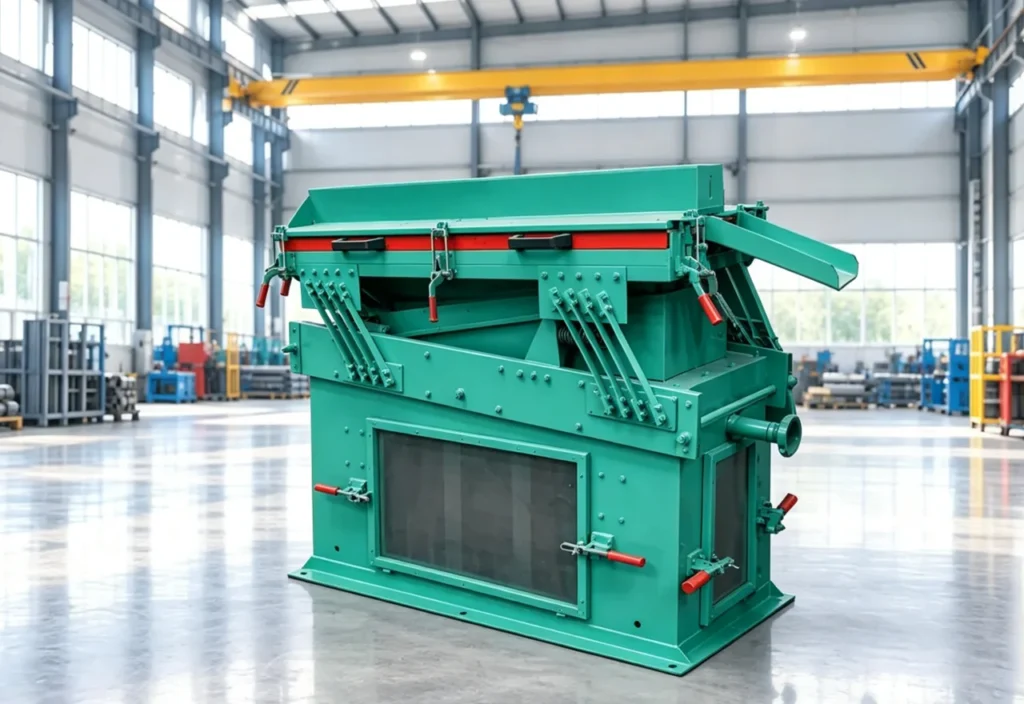
The Air Gravity Separator is a dry physical separation unit for classifying prepared granular material according to density, particle size and aerodynamic behavior. It combines controlled airflow, a rotating grading wheel, centrifugal classification, gravity settling, secondary air reclassification and staged discharge.
A downstream air-classification stage after crushing, pulverizing and screening, not a vibrating gravity table.
The Air Gravity Separator is a dry physical separation unit for classifying prepared granular material according to density, particle size and aerodynamic behavior. It combines controlled airflow, a rotating grading wheel, centrifugal classification, gravity settling, secondary air reclassification and staged discharge. This is an air-classification and gravity system rather than a generic vibrating table. It is normally used after crushing, pulverizing and screening, when the feed is sufficiently liberated and has a useful difference in effective mass and aerodynamic response.
content-manifest.json flags product-65 as a possible title/body mismatch. Capacity, cut point and power are not given as a model table in the English source.
02 / Operating Principle
Prepared mixed material enters from the upper feed section and is distributed across the inclined separation deck. Controlled vibration, airflow and gravity work together to stratify the material by density so lighter and heavier fractions can follow different discharge paths.
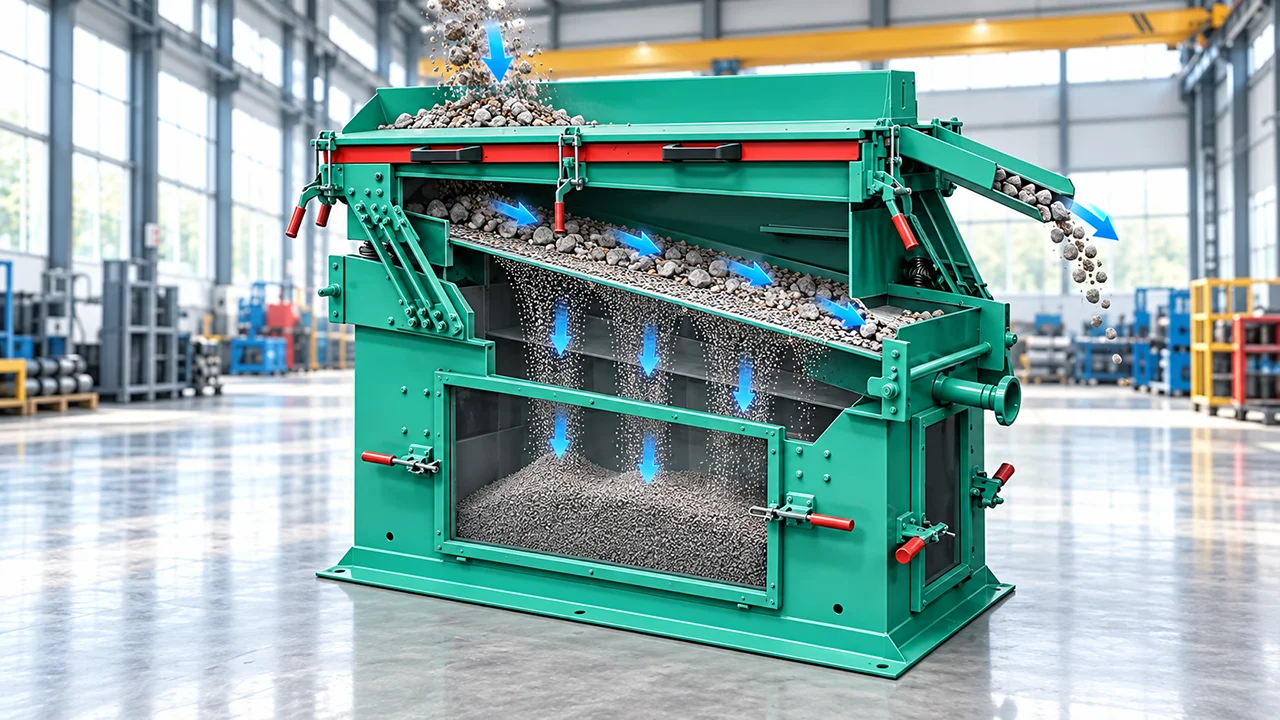
Prepared mixed material enters from the upper feed section and falls onto the inclined separation deck.
The vibrating deck spreads the material into a controlled moving layer and carries it across the separation surface.
Upward airflow and gravity act on the stratified material so particles with different densities separate into distinct trajectories.
Separated fractions leave through their respective discharge paths for collection or downstream processing.
Suitability depends on composition, feed condition and the selected equipment configuration.
Suitability depends on composition, feed condition and the selected equipment configuration.
Suitability depends on composition, feed condition and the selected equipment configuration.
Suitability depends on composition, feed condition and the selected equipment configuration.
Suitability depends on composition, feed condition and the selected equipment configuration.
Suitability depends on composition, feed condition and the selected equipment configuration.
04 / Machine Architecture
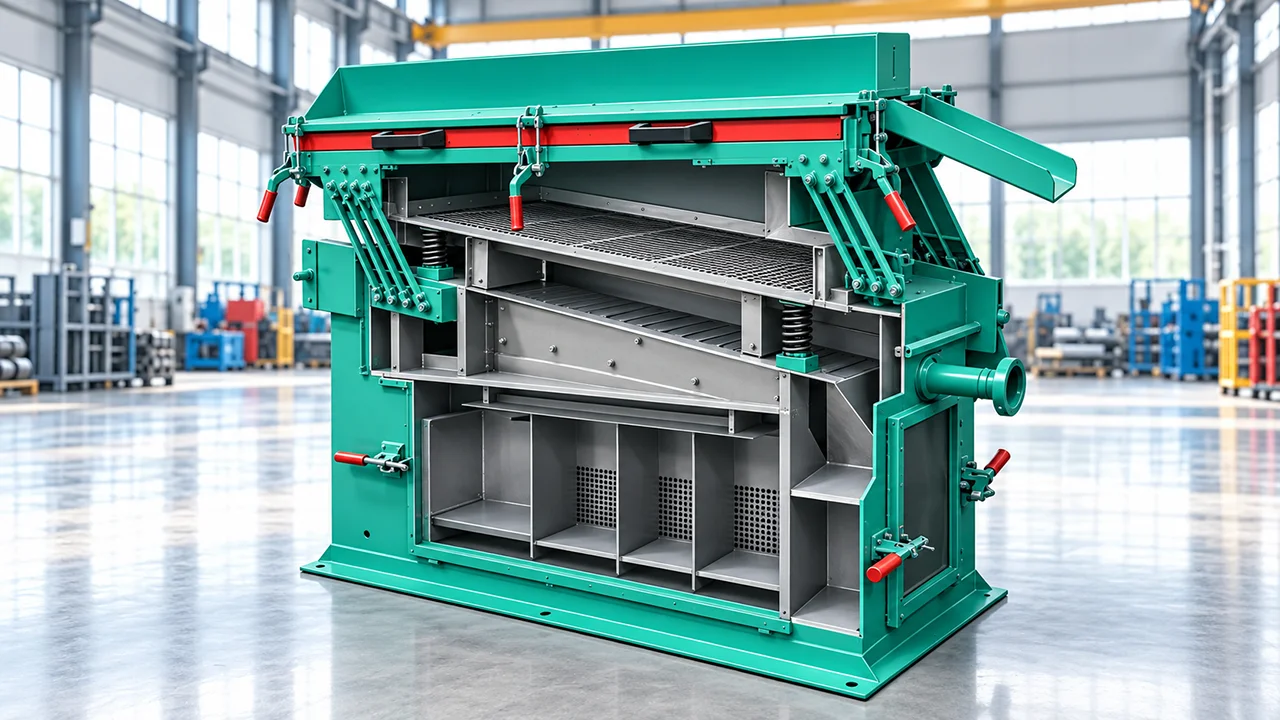
Receives prepared mixed material and directs it evenly into the upper processing section.
Provides the first screening and distribution surface to spread material across the machine width.
Supports the working deck and transmits controlled vibration for stable material movement.
Forms the main air-gravity separation surface where particles stratify and travel along different paths.
Supplies upward process air beneath the deck to assist density-based separation.
Collect separated material fractions from the lower discharge zones for downstream handling.
Connects the machine to the external air system for process airflow control and dust handling.
Encloses the separation system and provides service access for inspection, cleaning and maintenance.
Classification uses airflow, a rotating grading wheel, centrifugal force, gravity settling and secondary-air reclassification of fines attached to coarse particles.
Source-stated values retained for engineering documentation. Final specifications depend on the selected configuration, feed material and agreed operating conditions. Specification inputs listed on the published page: Feed capacity and operating hours; Particle-size distribution and moisture limit; Target cut point and acceptable fine/coarse carryover; Classifier speed, airflow and induced-draft fan duty; Cyclone and dust-collector configuration; Installed power, dimensions and service clearances; Product and middlings discharge routes
Dry classification where density and aerodynamic contrast is useful.
Light/heavy split after size reduction.
Aerodynamic classification of prepared composite fractions.
Downstream classification before further separation.
Only where density and aerodynamic contrast is suitable after testing.
No. The described system is an air-classification unit using induced airflow, a rotating grading wheel, centrifugal force and gravity. A vibrating deck should not be assumed unless it is included in the determined configuration.
Use dry, free-flowing and reasonably liberated particles with a controlled size distribution. Wet, oversized or strongly agglomerated feed can reduce classification stability.
It can, when the material is dry and within the electrostatic separator's accepted size range. The interface and feed conditioning should be determined as one process design.
No. Capacity, cut point, purity and recovery depend on material properties, airflow, wheel speed, dust loading and line configuration. They should be established from representative tests and written into the final equipment quotation.
Provide representative samples or photos, composition, particle-size distribution, moisture, required capacity, target products, installation country, site utilities and available layout.
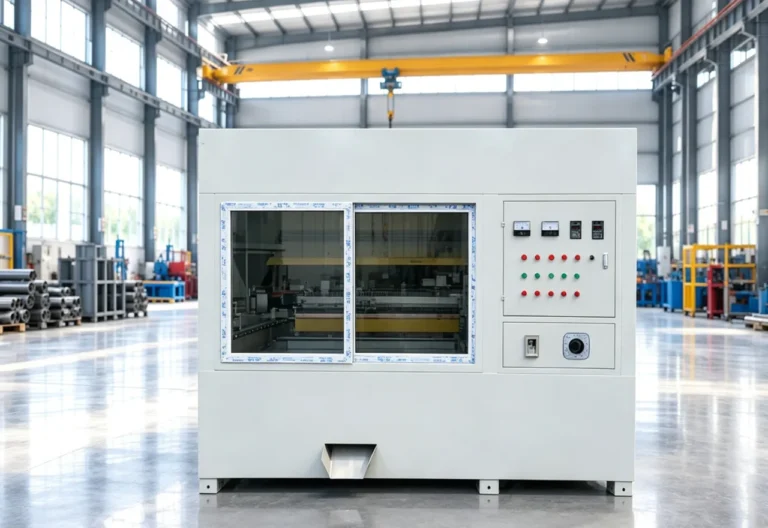
The Electrostatic Separator is a dry high-voltage separation machine for dividing conductive and non-conductive particles according to their different electrical behavior in an electrostatic…
View Equipment →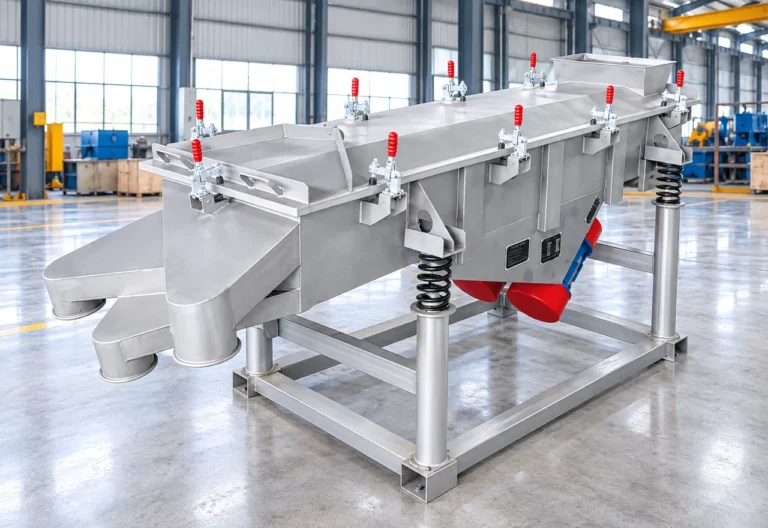
The Vibratory Separator is a linear screening machine designed to classify granular and powdered recycling materials into different particle-size fractions.
View Equipment →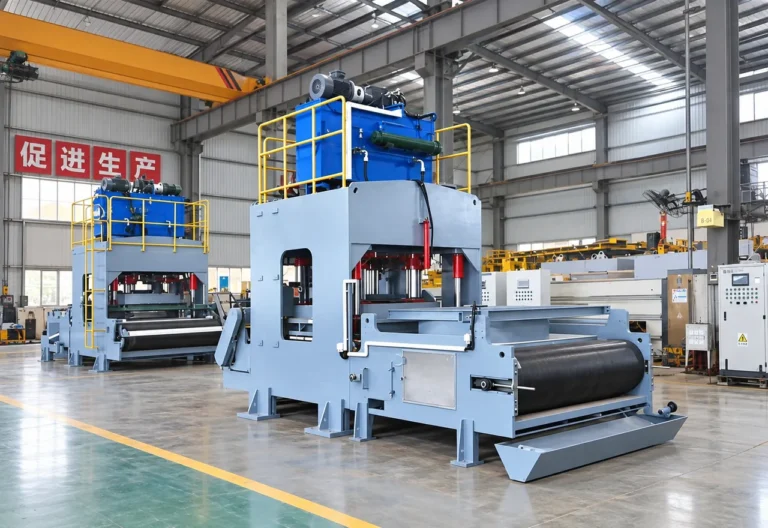
The Hydraulic Dewatering Machine is a high-pressure solid-liquid separation system for sludge, slurry and other high-moisture industrial materials.
View Equipment →Send material, capacity, target output and site information for an application review.
You can also upload material photos, equipment images, plant layouts or technical documents.
You don't need to know all the technical details. Tell us what you're working with and what you want to achieve, and our team will help you determine the next step.