Industry & Market
Solar Panel Recycling Demand Is Entering a New Growth Stage
Solar panel recycling demand is entering a new growth stage as aging photovoltaic installations, project repowering, and rapid global solar deployment increase the volume of…
The global solar industry is entering a new stage of development as solar panel recycling demand continues to increase. Rapid growth in photovoltaic installations over the past two decades has created a large and expanding installed base of solar panels, while aging modules, damaged equipment, technological upgrades, and project repowering are beginning to generate greater volumes of end-of-life materials.
Solar energy remains one of the most important technologies supporting the global transition toward lower-carbon electricity generation. However, as the number of photovoltaic installations increases, the industry is also facing a new challenge: how to manage retired solar panels efficiently and recover the valuable materials they contain.
This is creating new opportunities across the solar panel recycling industry. Recycling companies, photovoltaic manufacturers, project developers, waste-management businesses, and technology providers are increasingly investing in collection, dismantling, material separation, and recovery capabilities.
The Growing Volume of Retired Solar Panels
The expansion of solar panel recycling is closely connected to the rapid growth of global photovoltaic capacity.
Large numbers of solar panels were installed during the early expansion of the solar industry. Many of these modules are now approaching the later stages of their expected operating lives.
Although modern solar panels can often operate for decades, modules may be removed before the end of their technical lifespan for several reasons. Equipment can be damaged by severe weather, transportation, installation problems, or electrical failures. In addition, older panels may be replaced with newer, higher-efficiency modules as solar projects are upgraded.
This means that the future supply of recyclable photovoltaic modules will come from several sources rather than only from panels that have reached the end of their designed service life.
Why Solar Panel Recycling Is Becoming More Important
Solar panels contain a combination of valuable, reusable, and recyclable materials.
Depending on the panel technology, a typical crystalline silicon photovoltaic module can contain:
- Glass
- Aluminum
- Silicon
- Copper
- Silver
- Polymer materials
- Other metals and components
Glass generally represents the largest portion of a conventional solar panel by weight. Aluminum frames can also be recovered relatively efficiently.
More advanced recycling processes can target higher-value materials such as silicon, copper, and silver.
As recycling technologies improve, the industry is moving beyond simple disposal or low-value material recovery toward more comprehensive resource recovery.
Europe Is Developing a More Structured Recycling Market
Europe has been one of the leading regions in developing policies and infrastructure for photovoltaic waste management.
The region’s long history of solar deployment means that significant numbers of panels will eventually enter recycling and waste-management systems.
European regulations and circular-economy initiatives are also encouraging manufacturers and other stakeholders to consider the full lifecycle of photovoltaic products.
This environment is supporting investment in specialized collection and recycling infrastructure. Companies are developing systems that can receive used panels, remove frames and junction boxes, separate major materials, and process components for further recovery.
The development of regional recycling networks may become increasingly important as solar panel volumes continue to increase.
North America Is Preparing for Higher Recycling Volumes
The United States has experienced substantial growth in solar installations, creating a large and expanding base of photovoltaic assets.
As the country’s solar fleet matures, recycling demand is expected to increase. In addition to panels reaching the end of their operating lives, damaged modules and project repowering are expected to contribute to the recycling stream.
The growth of domestic solar manufacturing and supply-chain investment is also creating opportunities for a more localized circular economy.
Recycling facilities located closer to solar farms, module manufacturers, distributors, and waste-management networks could help reduce transportation costs and improve material recovery.
Asia-Pacific Will Be a Major Source of Future Demand
The Asia-Pacific region is expected to remain one of the most important markets for solar panel recycling because of its enormous installed photovoltaic capacity.
China in particular has built a large solar manufacturing and deployment ecosystem. The country’s significant installed base means that the volume of aging and retired modules is expected to become increasingly important over time.
Other Asian markets are also expanding solar generation rapidly. As these installations mature, demand for collection, recycling, and material recovery infrastructure is likely to increase.
The scale of solar deployment in the region could make Asia-Pacific a major center for the development of high-volume recycling technologies.
Solar Panel Recycling Technologies Are Evolving
Solar panel recycling is not a single process. Different technologies can be used depending on panel design, material composition, desired recovery rates, and economic conditions.
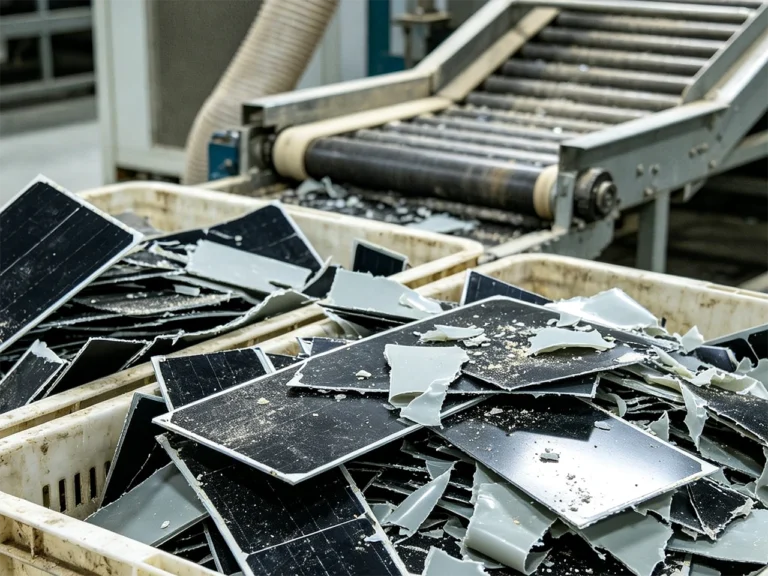
Mechanical processing is commonly used to dismantle modules and separate major components. Frames, junction boxes, cables, and glass can often be removed through relatively straightforward processing steps.
More advanced systems can use thermal, chemical, or mechanical techniques to separate materials that are more difficult to recover.
The development of efficient separation technologies is particularly important for recovering high-value materials that are present in relatively small quantities.
Glass Recovery Is a Major Part of the Process
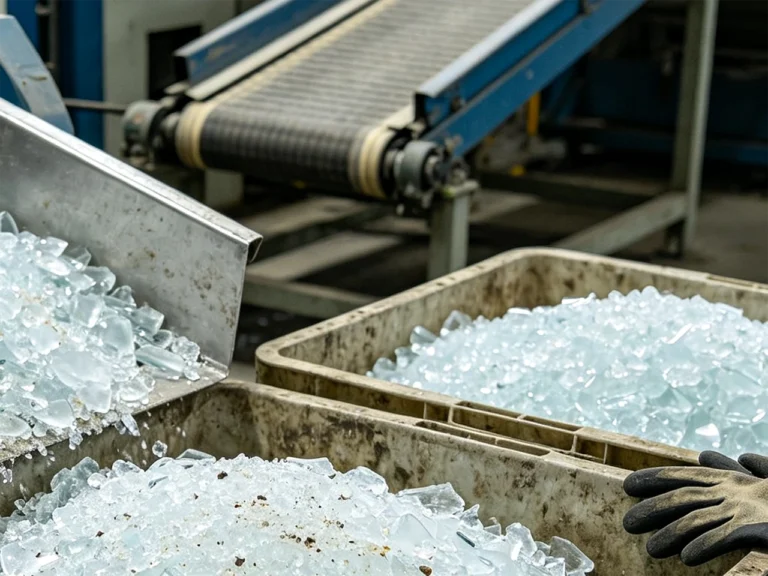
Because glass makes up a significant percentage of the weight of many solar panels, glass recovery is an important component of photovoltaic recycling.
Recovered glass can potentially be used in construction materials, glass products, or other industrial applications, depending on its quality and contamination level.
However, achieving high-quality glass recovery can be challenging because the glass is bonded to other layers within the photovoltaic module.
Efficient removal of encapsulants and other materials is therefore an important area of technology development.
Silicon Recovery Could Increase the Value of Recycling
Silicon is another important material in crystalline silicon photovoltaic panels.
Recovering silicon from used modules can potentially create additional value, particularly as demand for solar manufacturing materials continues to grow.
However, recovering high-quality silicon is more technically challenging than simply separating glass or aluminum. The material may require additional treatment and purification before it can be reused in demanding applications.
Future recycling technologies may therefore focus increasingly on improving silicon recovery rates and reducing the cost of purification.
Silver and Other Valuable Materials Attract Attention
Although silver represents a relatively small portion of a solar panel by weight, it can contribute significantly to the potential economic value of recycling.
Silver is used in electrical contacts and other components of photovoltaic cells. As solar panel production has expanded, manufacturers have sought to reduce silver consumption and improve material efficiency.
Nevertheless, recovering silver from large quantities of retired panels could become an important part of the recycling value chain.
Copper, aluminum, and other metals can also contribute to the overall economics of photovoltaic recycling.
Panel Design Will Influence Future Recycling
The design of photovoltaic modules is changing as manufacturers pursue higher efficiency, lower costs, and improved performance.
These changes can also affect recycling processes.
Different module structures, encapsulation materials, cell technologies, and backsheet designs may require different dismantling and separation techniques.
This creates a need for recycling systems that can handle multiple generations of photovoltaic products rather than relying on a single standardized module design.
Designing future solar panels with recycling in mind could also make material recovery easier and more economical.
The Economics of Solar Panel Recycling Remain Important
Growing recycling demand does not automatically guarantee strong recycling economics.
The profitability of a recycling operation depends on several factors, including:
- Collection costs
- Transportation expenses
- Processing costs
- Labor requirements
- Energy consumption
- Material recovery rates
- Recovered material prices
- Panel composition
- Facility utilization
- Local regulations
Transportation can be particularly important because solar panels are relatively large and heavy compared with the value of some recovered materials.
For this reason, efficient logistics and strategically located recycling facilities may become critical competitive advantages.
Collection Infrastructure Is a Key Challenge
Before panels can be recycled, they must be collected and transported to appropriate processing facilities.
The solar industry has historically focused primarily on installation and electricity generation. As the installed base ages, more attention will need to be given to reverse logistics.
Collection systems may involve solar project owners, installers, distributors, waste-management companies, manufacturers, and specialized recyclers.
A well-developed collection network can help ensure that retired panels are directed toward appropriate recycling channels instead of being disposed of through less efficient methods.
Solar Project Repowering Could Accelerate Recycling Demand
Repowering is expected to become an important source of photovoltaic recycling demand.
As solar technology improves, project owners may replace older modules with newer, higher-efficiency panels even when existing equipment is still operational.
Replacing more panels with fewer high-efficiency modules can increase energy output from a site without requiring proportional expansion of land or infrastructure.
However, repowering also creates a large volume of used modules that need to be managed responsibly.
This could significantly increase the supply of recyclable panels in mature solar markets.
Second-Life Use May Complement Recycling
Not every removed solar panel necessarily needs to be recycled immediately.
Some modules that are no longer economically attractive for large utility-scale projects may still be capable of generating electricity.
This creates a potential market for second-life applications.
Used panels may be redeployed in smaller projects, off-grid systems, agricultural applications, or other situations where lower efficiency is acceptable.
However, second-life use requires testing, certification, transportation, and reliable information about panel condition.
As these systems develop, the solar industry may increasingly distinguish between panels suitable for reuse and those that should proceed directly to recycling.
Recycling Can Support a More Circular Solar Industry
Solar panel recycling is becoming an increasingly important part of the broader circular economy.
Instead of treating retired modules as waste, recycling allows the industry to recover materials and return them to productive use.
Recovered aluminum can potentially enter metal supply chains. Glass can be processed for suitable applications. Copper and other metals can be recovered for industrial use, while advanced processes may recover silicon and silver.
This approach can reduce the amount of material sent to landfill and potentially reduce demand for some primary raw materials.
Environmental Considerations Are Increasing
Environmental performance is becoming an increasingly important factor across the solar industry.
Solar power produces electricity without direct combustion emissions during operation, but photovoltaic equipment still has a material footprint associated with manufacturing, transportation, and eventual disposal.
Effective recycling can help reduce the environmental impact associated with the end-of-life stage of solar modules.
However, recycling facilities themselves must also manage energy consumption, chemical use, wastewater, emissions, and residual waste.
The development of environmentally responsible recycling processes will therefore be important as the industry scales.
Regulation Will Shape Market Development
Government policies are likely to play an important role in the development of solar panel recycling markets.
Regulations can influence how photovoltaic modules are collected, transported, treated, and disposed of.
Extended producer responsibility systems, recycling targets, waste classification rules, and landfill restrictions can all affect the economics of recycling.
Clear and consistent regulatory frameworks may also encourage investment by providing companies with greater visibility into future material flows and compliance requirements.
Manufacturers May Become More Involved
Solar panel manufacturers are likely to play a growing role in recycling and circular-economy initiatives.
Manufacturers have direct knowledge of module materials and construction, which can help inform recycling processes.
Some companies may develop take-back programs or partnerships with specialized recycling providers. Others may focus on designing modules that are easier to disassemble and recycle.
Closer collaboration between manufacturers and recyclers could improve material traceability and increase recovery rates.
The Market for Recovered Materials Will Be Important
The long-term success of solar panel recycling depends partly on the demand for recovered materials.
Recycled materials need to compete economically and technically with virgin materials.
Higher-value recovery processes can improve the economics of recycling, but they may also require greater capital investment and more complex processing.
As technology improves and recycling volumes increase, economies of scale could help reduce processing costs.
The development of stable markets for recovered glass, aluminum, copper, silicon, silver, and other materials will therefore be critical.
Recycling Capacity Is Expected to Expand
As the number of retired solar panels increases, more dedicated recycling facilities are likely to be developed.
Some facilities may focus on high-volume mechanical processing, while others may specialize in recovering higher-value materials.
Regional hubs could emerge in areas with large concentrations of solar installations and strong waste-management infrastructure.
The industry may also see greater integration between solar panel collection, recycling, material refining, and manufacturing.
Technology Will Determine Future Competitiveness
The next phase of solar panel recycling is likely to be shaped by technological innovation.
Companies that can achieve higher recovery rates while maintaining low operating costs may gain an advantage.
Important areas of development include:
- Automated panel dismantling
- Improved glass separation
- Silicon recovery
- Silver recovery
- Advanced material purification
- Low-energy processing
- Chemical recycling technologies
- Automated sorting
- Digital material tracking
- Modular recycling systems
Automation may become particularly valuable as recycling volumes increase and labor-intensive dismantling becomes less economical.
The Outlook for Solar Panel Recycling
Solar panel recycling demand is entering a new growth stage as the global photovoltaic industry moves from rapid deployment toward a more mature lifecycle.
The combination of aging solar installations, project repowering, damaged modules, and continued photovoltaic expansion will create increasingly large material flows.
Europe, North America, China, and other major solar markets are likely to develop larger collection and recycling networks as the number of retired modules increases.
At the same time, improvements in processing technology could allow recyclers to recover a broader range of valuable materials at higher purity and lower cost.
The future of the industry will depend on more than simply increasing recycling capacity. Successful companies will need to manage feedstock supply, logistics, processing efficiency, regulatory requirements, and recovered-material markets.
Conclusion
Solar panel recycling is becoming an increasingly important part of the global photovoltaic value chain.
As millions of additional solar modules are installed around the world, the industry must prepare for the growing volume of panels that will eventually require reuse, recycling, or disposal.
The opportunity extends beyond waste management. Solar panels contain significant quantities of glass, aluminum, silicon, copper, silver, and other materials that can potentially be recovered and returned to productive use.
As recycling technologies improve and collection infrastructure expands, solar panel recycling could become an important source of secondary raw materials for the renewable energy industry.
The transition toward a more circular solar economy is still developing, but the direction is clear: the next stage of solar growth will increasingly include not only how panels are manufactured and installed, but also how efficiently their materials are recovered at the end of their useful lives.
BREM Capability
Related BREM Solutions
Move from market insight to the process routes and equipment BREM engineers for recycling projects.
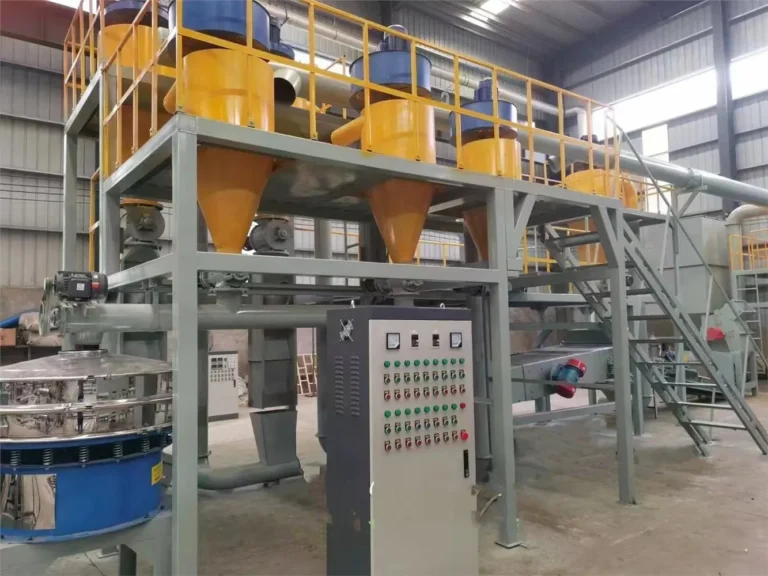
Solution
Solar Panel Recycling Solution
Recover glass, aluminum, copper and other valuable fractions from end-of-life photovoltaic modules through controlled dismantling, laminate separation and mechanical processing.
View Solution →Production Line
Solar Panel Recycling Line
An industrial recycling line for end-of-life crystalline-silicon PV modules, combining dismantling, glass removal, size reduction and material separation.
View Line →Continue Reading
Related Articles