Industry & Market
Lithium Battery Recycling Market Continues to Expand in Europe
Europe’s lithium battery recycling sector continues to expand as regulation, EV adoption and circular-material requirements drive new pretreatment and material recovery capacity.
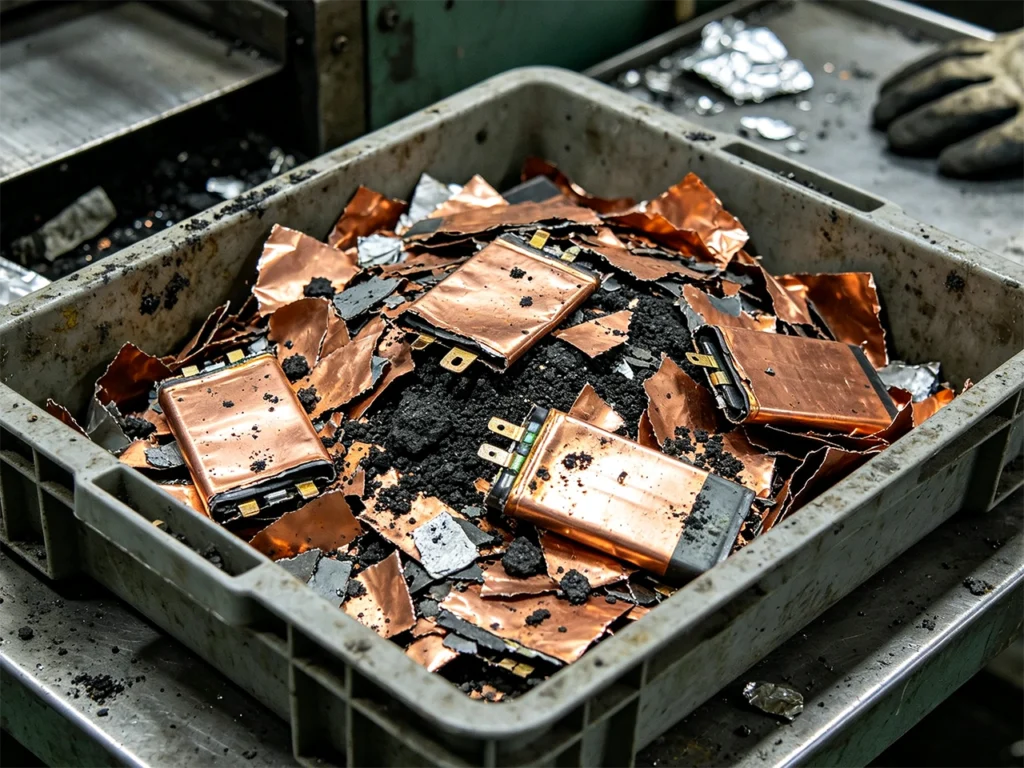
Europe’s lithium battery recycling industry continues to develop as electric vehicle adoption, battery manufacturing, regulatory requirements and demand for secondary raw materials reshape the regional battery value chain.
New recycling projects are being developed across Europe, covering battery collection, discharge, dismantling, mechanical pretreatment, black mass production and downstream material recovery. At the same time, the market is becoming more selective: announced capacity is increasing, but recyclers must still secure reliable feedstock, control operating costs and produce fractions that can be efficiently processed downstream.
For recycling companies and investors, this means the European market is moving from an early expansion phase toward a more structured and technically demanding industry.
Europe Is Building a Larger Battery Recycling Infrastructure
Lithium-ion battery recycling capacity has expanded significantly across Europe during the past several years.
The market includes several different types of facilities:
- battery collection and preparation sites
- EV battery pack and module dismantling operations
- mechanical pretreatment plants
- black mass production facilities
- hydrometallurgical and pyrometallurgical refining plants
- integrated recycling facilities combining several processing stages
Fraunhofer ISI reported that European lithium-ion battery pretreatment capacity was expected to rise to around 420,000 tonnes per year by the end of 2026 based on operating and announced projects. Announced pretreatment capacity could reach approximately 520,000 tonnes per year by 2030.
This illustrates the scale of investment taking place across the European recycling sector.
However, installed or announced capacity should not be interpreted as actual processing volume. Some projects operate below nameplate capacity, while others depend on future battery waste volumes or battery-production scrap.
As a result, the European market currently combines two trends:
- increasing recycling capacity
- continuing competition for suitable feedstock
Regulation Is Becoming a Major Driver
One of the strongest long-term drivers is the European Union Batteries Regulation.
Regulation (EU) 2023/1542 establishes requirements covering the entire battery life cycle, including collection, recycling efficiency, material recovery and recycled content.
For lithium-based waste batteries, the regulation requires a recycling efficiency of at least 65% by average weight, increasing to 70% by the end of 2030.
Material recovery requirements are also becoming more demanding.
By the end of 2027, recycling processes are required to achieve recovery targets of:
- 90% for cobalt
- 90% for copper
- 90% for lead
- 90% for nickel
- 50% for lithium
By the end of 2031, these targets increase to:
- 95% for cobalt
- 95% for copper
- 95% for lead
- 95% for nickel
- 80% for lithium
These requirements encourage recyclers to look beyond simple battery destruction or volume reduction.
The focus increasingly moves toward controlled processing and the production of recoverable material fractions with sufficient purity for downstream recovery.
Recycled Content Requirements Strengthen the Circular Battery Market
The EU regulation also introduces minimum recycled-content requirements for certain batteries.
From August 2031, applicable batteries placed on the EU market will need to contain minimum recycled shares including:
| Material | Minimum Recycled Content |
|---|---|
| Cobalt | 16% |
| Lead | 85% |
| Lithium | 6% |
| Nickel | 6% |
Higher requirements are scheduled from 2036 for cobalt, lithium and nickel.
This creates an important connection between battery recycling and future battery manufacturing.
Recovered materials are no longer viewed only as waste-treatment outputs. They are increasingly part of the raw-material supply strategy for the European battery industry.
For recyclers, this strengthens the importance of producing consistent intermediate materials that can enter further refining and material recovery processes.
Black Mass Is Becoming a Key Intermediate Product
In many lithium battery recycling systems, mechanical pretreatment is designed to separate batteries into several recoverable fractions.
Typical outputs may include:
- black mass
- copper
- aluminum
- plastics
- ferrous metals
- separator materials
- other mixed fractions
Black mass is particularly important because it may contain valuable cathode and anode materials such as:
- lithium
- nickel
- cobalt
- manganese
- graphite
The exact composition depends on battery chemistry, feedstock condition and the recycling process.
Mechanical pretreatment therefore plays an important role in determining the quality of material entering downstream refining.
A well-designed system must do more than reduce battery size.
It must control:
- feedstock preparation
- safe discharge or deactivation
- shredding and crushing
- screening
- metal separation
- fine-powder recovery
- dust and exhaust handling
The quality and stability of these stages directly influence downstream material recovery.
Pretreatment and Refining Are Developing at Different Speeds
The European battery recycling industry can generally be divided into two major stages.
Mechanical Pretreatment
Pretreatment typically includes:
- battery discharge or deactivation
- pack or module dismantling
- shredding
- crushing
- screening
- physical separation
- black mass collection
This stage produces intermediate fractions that can be transported or processed further.
Material Refining
Downstream refining is used to recover individual materials from black mass and other concentrated fractions.
Depending on the process route, this may involve:
- hydrometallurgy
- pyrometallurgy
- purification
- precipitation
- crystallization
- other chemical recovery processes
Not every recycling company performs both stages.
Some companies specialize in mechanical pretreatment, while others operate refining facilities capable of processing black mass from multiple sources.
This division creates opportunities for regional pretreatment plants located closer to battery waste generation.
Feedstock Availability Remains One of the Main Challenges
Although the long-term volume of end-of-life batteries is expected to increase, the current European recycling market does not always have unlimited feedstock.
Recycling facilities may process a combination of:
- end-of-life EV batteries
- damaged batteries
- consumer lithium batteries
- energy-storage batteries
- battery-production scrap
- electrode-production scrap
- modules and cells rejected during manufacturing
Manufacturing scrap remains particularly important during the early development of the battery recycling industry because large volumes of EV batteries have not yet reached end of life.
This creates a timing challenge.
Recycling capacity can sometimes grow faster than immediately available end-of-life battery volume.
For investors, securing feedstock should therefore be evaluated before determining plant capacity.
A technically advanced recycling line cannot operate economically if the project cannot obtain a stable material supply.
Battery Chemistry Is Changing Recycling Economics
Lithium-ion batteries are not a single uniform feedstock.
Different chemistries contain different quantities of valuable materials.
Common chemistries include:
- NMC
- NCA
- LFP
- LCO
- LMO
For example, nickel-manganese-cobalt batteries may contain higher-value nickel and cobalt fractions, while lithium iron phosphate batteries contain little or no nickel and cobalt.
As LFP batteries gain a larger share of the EV and energy-storage markets, recyclers may need to rely less on the value of cobalt and nickel alone.
This can increase the importance of:
- efficient lithium recovery
- copper recovery
- aluminum recovery
- graphite recovery
- lower processing cost
- higher equipment utilization
- improved separation efficiency
Recycling plants therefore need to be designed around realistic feedstock composition rather than a single theoretical battery type.
Safety Requirements Influence Equipment Design
Lithium battery recycling introduces safety challenges that differ from conventional metal recycling.
Depending on the feedstock, batteries may retain electrical energy and contain flammable electrolyte.
Potential risks include:
- short circuits
- thermal runaway
- fire
- gas release
- electrolyte leakage
- dust generation
For this reason, battery recycling projects often require dedicated pretreatment and safety systems before or during size reduction.
Possible process stages include:
- electrical discharge
- controlled battery dismantling
- inert or controlled-atmosphere processing
- temperature monitoring
- fire suppression
- ventilation
- dust collection
- exhaust treatment
The correct configuration depends on the battery condition, chemistry, size and project requirements.
There is no single process configuration suitable for every lithium battery recycling project.
Regional Pretreatment May Become More Important
Transporting complete EV battery packs over long distances can be expensive and operationally complicated.
Battery packs are:
- heavy
- bulky
- electrically complex
- potentially hazardous
- difficult to store and transport
This creates a potential role for regional pretreatment facilities.
A regional facility can receive batteries from nearby collection or dismantling networks and convert them into more concentrated material fractions.
For example:
End-of-Life Batteries
        ↓
Discharge
        ↓
Pack / Module Dismantling
        ↓
Shredding
        ↓
Crushing
        ↓
Screening
        ↓
Physical Separation
        ↓
Black Mass + Copper + Aluminum + Other FractionsBREM Capability
Related BREM Solutions
Move from market insight to the process routes and equipment BREM engineers for recycling projects.
Solution
Lithium Battery Recycling Solution
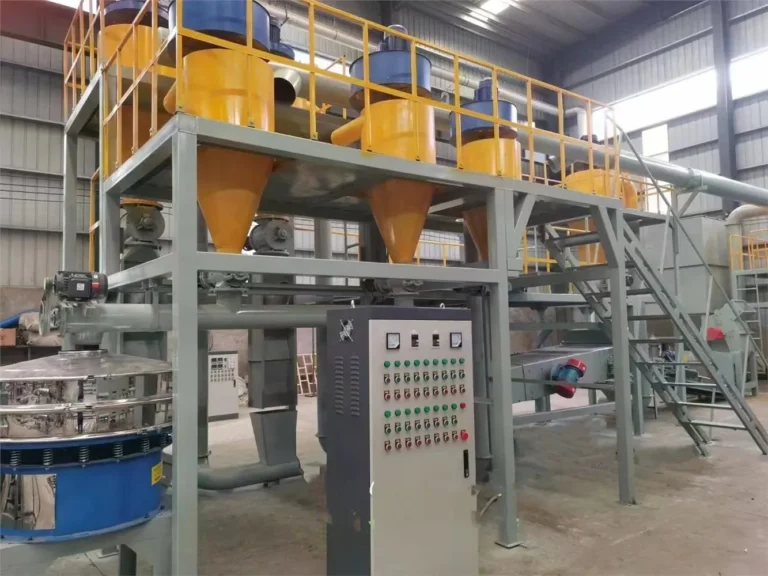
Mechanical recycling solutions for recovering black mass, copper, aluminum and other valuable fractions from end-of-life lithium-ion batteries and battery production scrap.
View Solution →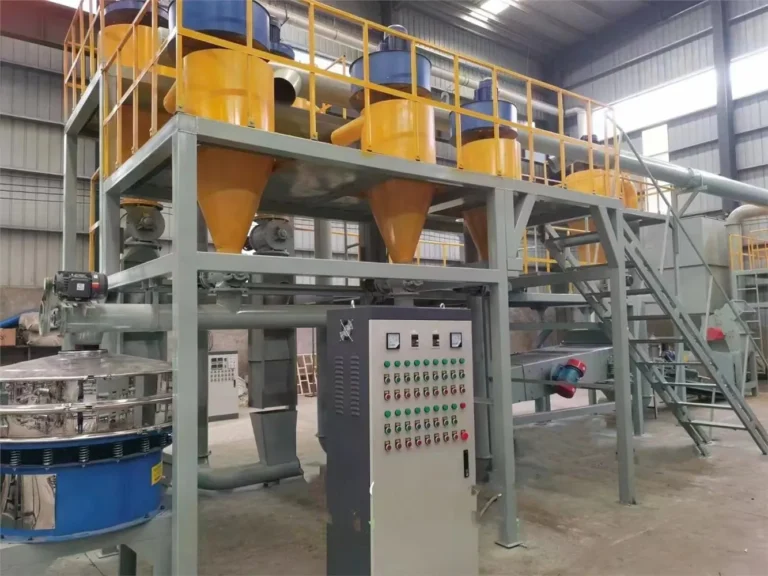
Solution
Battery Material Recovery Solution
Recover valuable material fractions from prepared lithium-ion battery streams through controlled classification, separation and material-specific process design.
View Solution →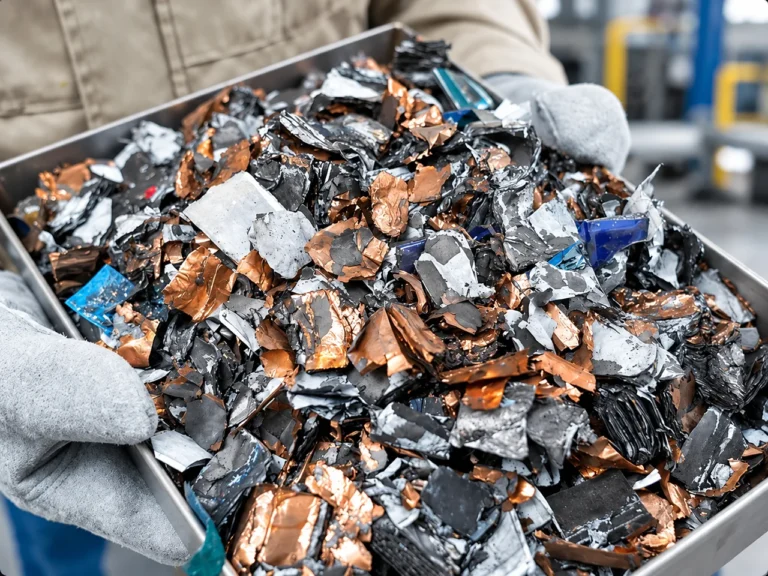
Solution
Black Mass Recycling Solution
Recover black-mass-rich active material from prepared lithium battery feedstock through controlled liberation, screening, metal separation and fine-powder collection.
View Solution →Continue Reading
Related Articles